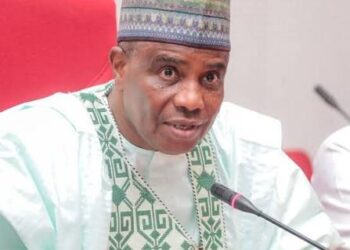
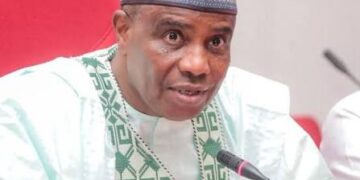



















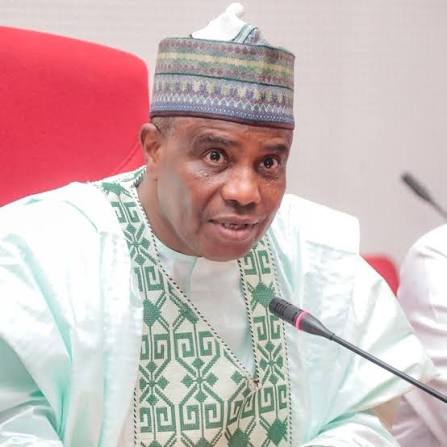

Former Governor of Sokoto and ex-Speaker of the House of Representatives, Aminu Waziri Tambuwal, says the emerging opposition coalition is driven by the need to rebuild national confidence and restore democratic balance ahead of the 2027 general elections.

Tambuwal, a key figure in the coalition talks in the African Democratic Congress (ADC), said the movement is less about unseating the ruling All Progressives Congress (APC) and more about re-anchoring leadership around unity, equity, and development.
The former governor stated this in Sokoto on Friday after attending a special prayer to mark his 60th birthday anniversary, which comes up on Saturday, January 10, 2026.
“What we are doing is about beginning again,” Tambuwal said in Sokoto. “We are rebuilding confidence between leaders and citizens and reconnecting politics to national progress.”
He argued that recent political defections into the ruling party have been motivated by self-preservation rather than conviction, warning that such moves erode democratic principles.
“Running to the center out of fear or for protection is not democracy,” he said. “Defections should be based on belief and vision, not political panic.”
Tambuwal claimed that the signs of public discontent are already visible and that the ruling party’s reaction shows the coalition is gaining traction.
“If the movement is insignificant, why the intimidation, cajoling and pressure on governors?” he asked.
He insisted that the 2027 polls must reflect the will of voters, adding that any attempt to manipulate outcomes will be challenged through lawful and constitutional means.
Political analysts say the new coalition — involving opposition parties, blocs, and high-profile political actors — could reshape Nigeria’s electoral chessboard, testing the APC’s dominance for the first time since 2015.
Tambuwal suggested that talks remain ongoing but will ultimately produce a platform large enough to challenge the status quo.
“It’s a work in progress,” he said. “When the time is right, a collective position will emerge.”
The coalition’s momentum comes as party alignments, defections, and legal battles intensify ahead of the next election cycle, signaling what may become one of Nigeria’s most competitive contests since the return to civil rule in 1999.