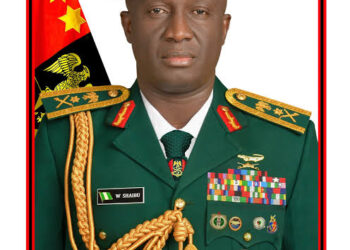











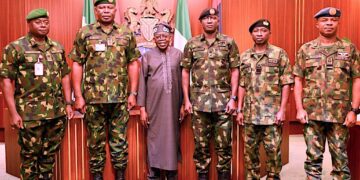




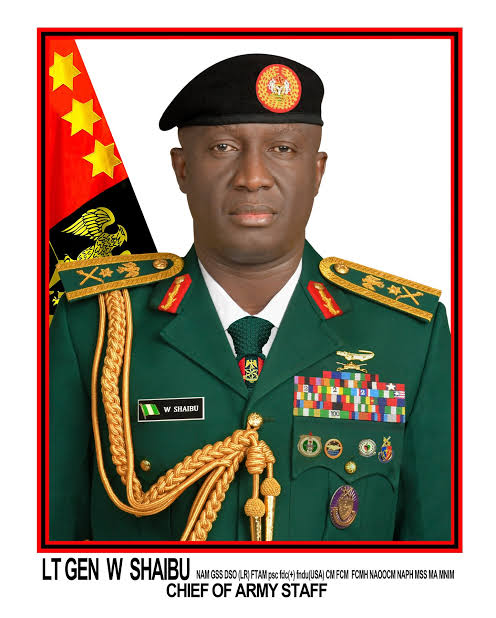

The Chief of Army Staff (COAS), Lieutenant General Waidi Shaibu, has approved the posting and appointment of 2,215 officers across various formations and units of the Nigerian Army.
The development was contained in a restricted signal dated December 31, 2025, and signed by the Military Secretary (Army), Major General E. I. Okoro.
According to the signal, an initial list of 2,313 officers was issued but later reviewed, with amendments and deletions affecting 98 officers of various ranks, bringing the total number of affected personnel to 2,215. The directive takes immediate effect.
The postings include the redeployment of 37 Major Generals, with significant changes at the level of General Officers Commanding (GOCs) in key divisions.
Major General Farouk Mijinyawa, formerly the GOC of 81 Division, has been posted to Army Headquarters, where he will serve in the Department of Army Policy and Plans (DAPP) as Deputy Chief of Policy and Plans (COPP).
Similarly, the former GOC of 8 Division, Sokoto, Major General Ibikunle Ajose, has been moved to Army Headquarters and appointed Deputy Chief of Operations (Army).
New GOCs have also been appointed. Major General B. P. Koughna has been named GOC of 8 Division and Commander, Sector 2, Joint Task Force (JTF), North-West. Meanwhile, Major General A. A. Babalola has been redeployed from the Defence Headquarters, DAPP, to assume duty as GOC, 81 Division, Nigerian Army, Lagos.
Beyond the Major Generals, the posting also affected 187 Brigadier Generals and 189 Colonels, as well as 235 Lieutenant Colonels, 856 Majors, 384 Captains, 318 Lieutenants, and three Second Lieutenants.
The signal directed all affected officers to report to their new areas of posting or redeployment on the dates specified against their names, warning that failure to comply would attract appropriate sanctions.
As of the time of filing this report, the Acting Director of Army Public Relations, Colonel Appolonia Anele, had yet to issue an official statement. However, a senior officer at Army Headquarters confirmed the development, describing it as a routine exercise aimed at enhancing operational effectiveness and optimal performance within the Service.