


















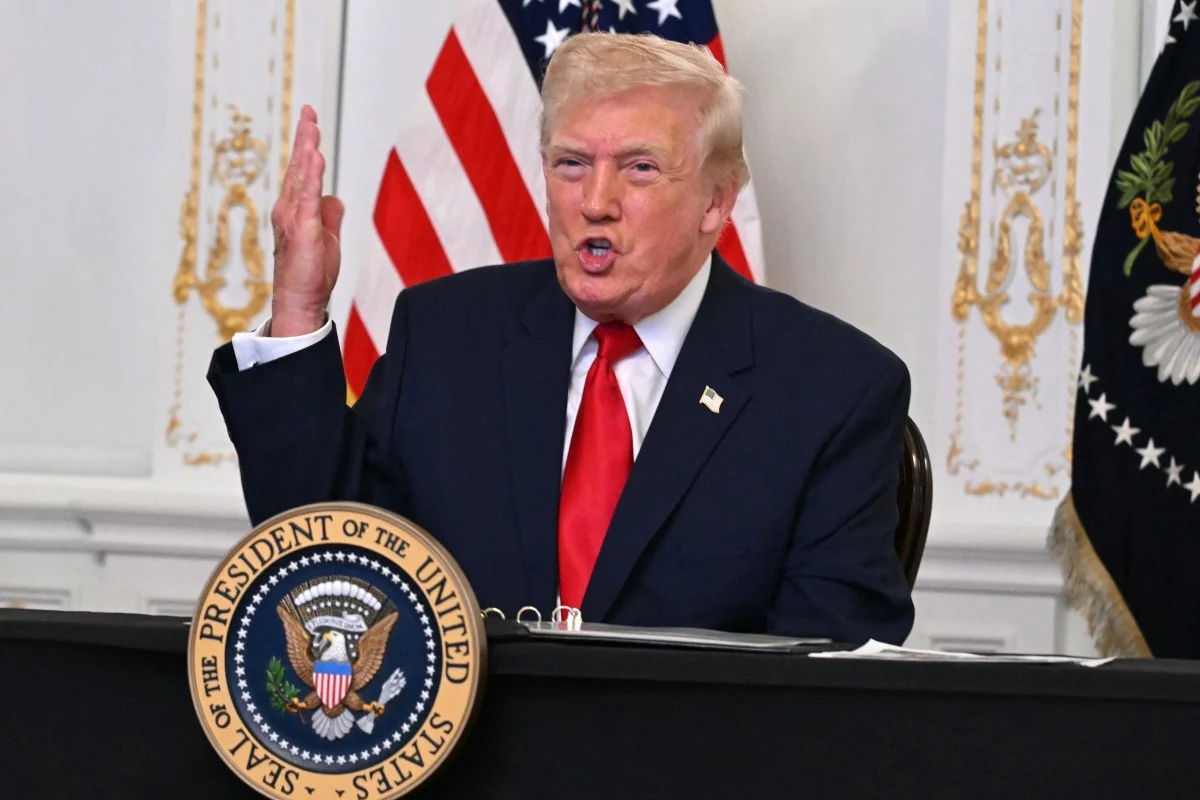

American President, Donald Trump’s national security strategy mentions Africa in passing as a source of critical minerals and a counter to China’s dominance.

In November 2025, the United States (US) released its new National Security Strategy describing how the country intends to protect its ‘core national interests.’
These interests not only include ensuring the US “remains the world’s strongest, richest, most powerful, and most successful country for decades to come,” but also articulate what it wants “in and from” the rest of the world.
The strategy invokes the ‘Trump Corollary’ to reinforce US dominance in the Western Hemisphere, recently marked by its actions in Venezuela and threats against Greenland. It prioritises economic protectionism, keeps the Indo-Pacific open only to benefit US supply chains, and supports European security by defending Western identity, restricting mass migration, and combating cultural erosion.
It also seeks to neutralise Middle Eastern adversaries without prolonged conflict and assert US dominance in fields like artificial intelligence, biotech, and quantum computing at the expense of global cooperation.
President Donald Trump seems intent on reducing the US presence everywhere except in the Western Hemisphere. While this threatens countries in Latin America and Greenland, America’s approach to Africa seems more limited, focusing on competition for mineral resources, not direct government involvement.
Africa’s role in the strategy is notably limited yet telling, receiving just three paragraphs at the end of the 29-page document. The continent is framed mainly as a cash cow for mineral resources and a battleground for China’s dominance in the global South.
In January, Kenya postponed signing a $1 billion trade agreement with China, reportedly under US pressure, as it awaits renewal of its eligibility in the African Growth and Opportunity Act (AGOA). AGOA, which lapsed last September despite its devastating impact on African industries, was approved by the House of Representatives this week.
In December 2025, the US delayed releasing $1.5 billion in health aid to Zambia, conditioning its support on securing access to critical minerals.
The approach towards Africa abandons lifesaving aid and democratic values, focusing instead on partnerships centred on trade, investment and resource extraction. It avoids long-term commitments, especially in military conflicts. It makes exceptions for short, targeted operations to suppress Islamist terrorist insurgencies, such as Nigeria’s Christmas Day strikes, as part of its crusade to defend Judeo-Christian values.
At its core, the new strategy is based on transactionalism – diplomacy as quid pro quo arrangements rather than partnerships grounded in democratic values and long-term goals. Originating in the ‘America First’ doctrine, transactionalism prioritises clear exchanges and short-term gains, ensuring the US maximises its benefits in resources, military cooperation or geopolitical leverage while permitting others to benefit only when this doesn’t undermine American interests.
It views policies based on normative values as harming national interests and favours bilateral, issue-specific deals over multilateralism, treating relationships as zero-sum competitions rather than genuine alliances. For example, in December, Mr Trump sought to bolster his ‘President of Peace’ image by facilitating the Washington Accords between the Democratic Republic of the Congo and Rwanda.
Both countries signed an agreement granting US firms preferential access to Congolese minerals, and the US pledged to develop a corridor connecting these resource-rich regions to Western markets, looking to oust China’s longstanding influence in the sector.
Despite the political grandstanding and claims of resolvin