




















Abuja — Proceedings in the alleged United Kingdom property fraud case involving prominent lawyer, Chief Mike Ozekhome, SAN, have been adjourned to February 24, 2026, following the decision of the Attorney-General of the Federation (AGF) and Minister of Justice, Prince Lateef Fagbemi, SAN, to take over the prosecution from the Independent Corrupt Practices and Other Related Offences Commission (ICPC).
The matter came up before a High Court of the Federal Capital Territory (FCT), Maitama, where the AGF, represented by the Director of Public Prosecution of the Federation (DPPF), Mr. Rotimi Oyedepo, SAN, formally announced the takeover of the case file.
According to Oyedepo, the decision was made pursuant to Section 174 of the 1999 Constitution (as amended), which empowers the AGF to take over and continue criminal proceedings. He said the Ministry of Justice would collaborate with the ICPC to ensure the prosecution meets the highest standards of diligence, due process, fairness, and public confidence.
“The decision is guided by public interest and the need to instil confidence, fairness, and competence in the criminal justice system,” Oyedepo told the court.
The ICPC, represented by the Head of its High Profile Prosecution Department, Dr. Osuebeni Akpemesingha Akpos, raised no objection to the AGF’s application.
Similarly, Ozekhome, who was represented by a consortium of 16 Senior Advocates of Nigeria (SANs) led by former AGF Chief Kanu Agabi, did not oppose the takeover.
Consequently, Justice Peter Kekemeke adjourned the case to February 24, 2026 for further proceedings.
The suit, marked FCT/HC/CR/010/2026, lists the Federal Republic of Nigeria as plaintiff and Chief Mike Ozekhome, SAN, as the sole defendant.
Allegations
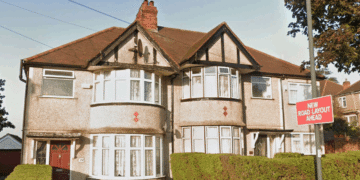
In the charge, the Federal Government alleged that Ozekhome, in August 2021 in London, directly received ownership of a property located at 79 Randall Avenue, London NW2 7SX, allegedly given to him by Mr. Shani Tali, knowing that the act constituted a felony — contrary to Section 13 and punishable under Section 24 of the Corrupt Practices and Other Related Offences Act, 2000.
The prosecution further alleged that the defendant, while acting as a legal practitioner, created a false Nigerian passport (No. A07535463) bearing the name Shani Tali to support a fraudulent claim of ownership of the property, contrary to Sections 363 and 364 of the Penal Code, Laws of the FCT, Abuja.
He was also accused of dishonestly using the forged passport to substantiate the ownership claim, knowing the document was false — contrary to Section 366, punishable under Section 364 of the Penal Code.
Origin of the Case
The charges followed a petition submitted to the ICPC by Mr. Olanrewaju Suraj, head of the Human and Environmental Development Agenda (HEDA).
The petition referenced a British court judgment which accused Ozekhome and others of conspiring with corrupt Nigerian officials to procure fake national identity documents in order to fraudulently claim ownership of a property in North London.
The ICPC stated that its investigation was triggered by a London property tribunal judgment that allegedly linked the defendant and others to a network of fraud and forged documents.
Related Case: Forfeiture Proceedings on UK Property
Meanwhile, in a related development, the Federal High Court, Abuja, has fixed February 25, 2026, to hear an application seeking the forfeiture of the disputed UK property to the Federal Government.
The application was filed by the Code of Conduct Bureau (CCB) in a suit marked FHC/ABJ/CS/2333/2025, listing the Administrator of the Estate of Late Jeremiah Useni as the sole defendant.
Justice Binta Nyako adjourned the matter to allow proper service of court processes on the deceased’s family.
Counsel to the CCB, Mr. Sufiya Ibrahim Ahmed, told the court that attempts were made to serve the processes at an address in Jos, Plateau State, as well as through a law firm in Abuja, which allegedly led to the residence of the deceased’s daughter.
However, Justice Nyako faulted the procedure, ruling that without an order of substituted service, such service was legally invalid.
She stressed that service is fundamental to the court’s jurisdiction and advised the CCB to file a motion seeking permission for substituted service by publication, inviting any interested party to appear before a final forfeiture order is made.