















*A Civic Reflection on Nigeria’s Strange Silence
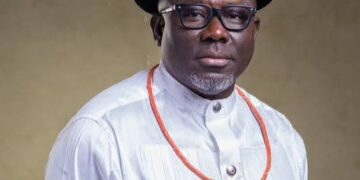
By Chris Curtis Okolo
There is a strange feeling that walks quietly through the streets of Nigeria.
It is not hunger, though hunger is everywhere.
It is not poverty, though poverty is painfully visible.
It is something deeper.
Something harder to name.
It feels like the absence of something sacred as though heaven itself has grown silent over a land once loud with prayers.
Yet, the churches are full.
The mosques overflow.
Prayer camps multiply across the landscape like mushrooms after rain.
So, the question presses harder:
Is it truly a dearth of God?
Or is it a dearth of courage among men?
Nigeria today resembles a nation under a strange psychological spell.
A country of over two hundred million people behaving, sometimes, like a crowd in a trance.
The people complain loudly about their suffering, yet often return the same architects of that suffering back into power.
They curse corruption in the morning and defend corrupt leaders by evening.
They cry for change every election season, yet walk calmly into the same political trap again and again.
It is almost as if the masses have been hypnotized.
And one cannot help but wonder:
Who is the hypnotist?
Is it the politicians?
Is it the system?
Is it fear?
Is it tribal loyalty?
Is it poverty itself?
Or is it something older… something deeper in the psychology of a wounded nation?
Psychologists tell us that prolonged hardship can produce a condition known as learned helplessness.
It is when a person suffers repeated failures or oppression until they begin to believe that resistance is useless.
Eventually, even when the door is open, the prisoner refuses to walk out.
Many societies have suffered this condition.
But Nigeria’s case feels different.
Here, the door is not only open.
The key is already in the hands of the people.
Politicians appear to understand this strange psychology better than the masses themselves.
They know the formula.
Divide the people by tribe.
Distract them with religion.
Entertain them with promises.
Confuse them with propaganda.
Then every four years, perform the grand ritual of democracy.
A ritual where citizens participate enthusiastically in the renewal of their own suffering.
If this were fiction, it would sound absurd.
Yet reality sometimes writes the strangest stories.
But perhaps the deepest mystery is spiritual.
Nigeria may be one of the most religious nations on earth.
We pray in buses.
We pray in markets.
We pray before journeys.
We pray before elections.
We pray for rain.
We pray for jobs.
We pray for miracles.
But there is one prayer we rarely make:
The prayer for courage.
The prayer that demands responsibility.
The prayer that asks not only for divine intervention, but for human action.
The Holy scripture once declared:
“The heaven, even the heavens, are the Lord’s: but the earth hath he given to the children of men.”
— Psalm 115:16
If this is true, then the earth including Nigeria has already been placed under human stewardship.
So why do we behave as if heaven must descend every four years to conduct our elections?
Why do we pray as though God forgot to give us minds, voices, and the power to organize?
Why do we ask heaven to fix what human cowardice refuses to confront?
Is it truly a dearth of God?
Or a dearth of responsibility?
African traditional wisdom offers another perspective.
In many old African cosmologies, when a community suffers repeated misfortune, elders sometimes ask a difficult question:
“Who offended the ancestors?”
It is not always a literal curse.
Sometimes it means the community has violated its own moral order.
The people stopped defending the truth.
The leaders abandoned justice.
The young surrendered their future.
When that happens, the elders say the land itself becomes sick.
Perhaps Nigeria’s crisis is not merely political.
Perhaps it is civilizational.
Sociologists would say the problem lies in weak institutions.
Economists would point to resource mismanagement.
Historians would mention colonial structures and elite capture.
Political scientists would speak of electoral manipulation.
All of them are correct.
But there is also something psychological and spiritual happening simultaneously.
A people cannot remain oppressed indefinitely without cooperating with the system that oppresses them even if unconsciously.
That cooperation may come through silence.
Through fear.
Through division.
Or through something even more dangerous:
Hope without action.
Which returns us to the uncomfortable question:
Is there a way out?
Can a nation wake up from political hypnosis?
Can a people rediscover their collective courage?
History says yes.
But history also warns that awakening rarely comes easily.
Sometimes it arrives through hardship.
Sometimes through a generation that refuses to repeat the old mistakes.
Sometimes through a moment when the people suddenly realize:
“We were never powerless.”
Another election year approaches.
The rituals will begin again.
Campaign slogans will fill the air.
Promises will be made.
Money will circulate.
Old divisions will be reopened.
And once again the question will stand quietly before the nation:
Are Nigerians ready to wake up?
Or will we walk willingly into another cycle of hypnotic politics that may take generations to undo?
God forbid, many will say.
Yet reality does not respond to prayers alone.
Reality responds to choices.
Perhaps help did not abandon Nigeria.
Perhaps help already came in the form of awareness, education, and the simple democratic power of the people.
But help sometimes waits for readiness.
And if a people refuse to use the tools already placed in their hands, even heaven may remain silent.
Not because God is absent.
But because the assignment was already given to men.
Nigeria does not suffer from a lack of divine presence.
What we may be experiencing is something far more troubling:
A dearth of awakened citizens.
Until that changes, the cycle may continue.
But the day Nigerians truly decide to wake up not just in prayer, but in civic consciousness the spell will break faster than anyone imagines.
Because no hypnotist, however skilled, can control a people who finally choose to open their eyes.
The real question is no longer whether Nigeria can be saved.
The question is far more personal.
Are Nigerians ready to save Nigeria?
The author:,b
Chris Curtis Okolo, can be reached on
Email: chriscurtiswrites@gmail.com
WhatsApp: 09037263372