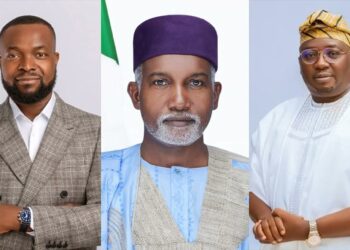


















Serving ministers and appointees angling for gubernatorial tickets in 2027 are in a dilemma as the resignation deadline draws near.

The government officials, following the President’s March 31, 2026, resignation directive, have begun weighing their options, chances in their various states, ahead of the major cabinet-exit decision. Their choices are not any lighter by the competing interests and feisty internal politics across states.
Already, no fewer than nine ministers in the Tinubu administration are expected to step down over renewed political ambitions across their respective states.
While some of the ministers may have already been preparing to exit, the stark reality is that they will have to return to their home states and reconnect with grassroots politics to determine their political fate ahead of 2027.
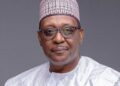
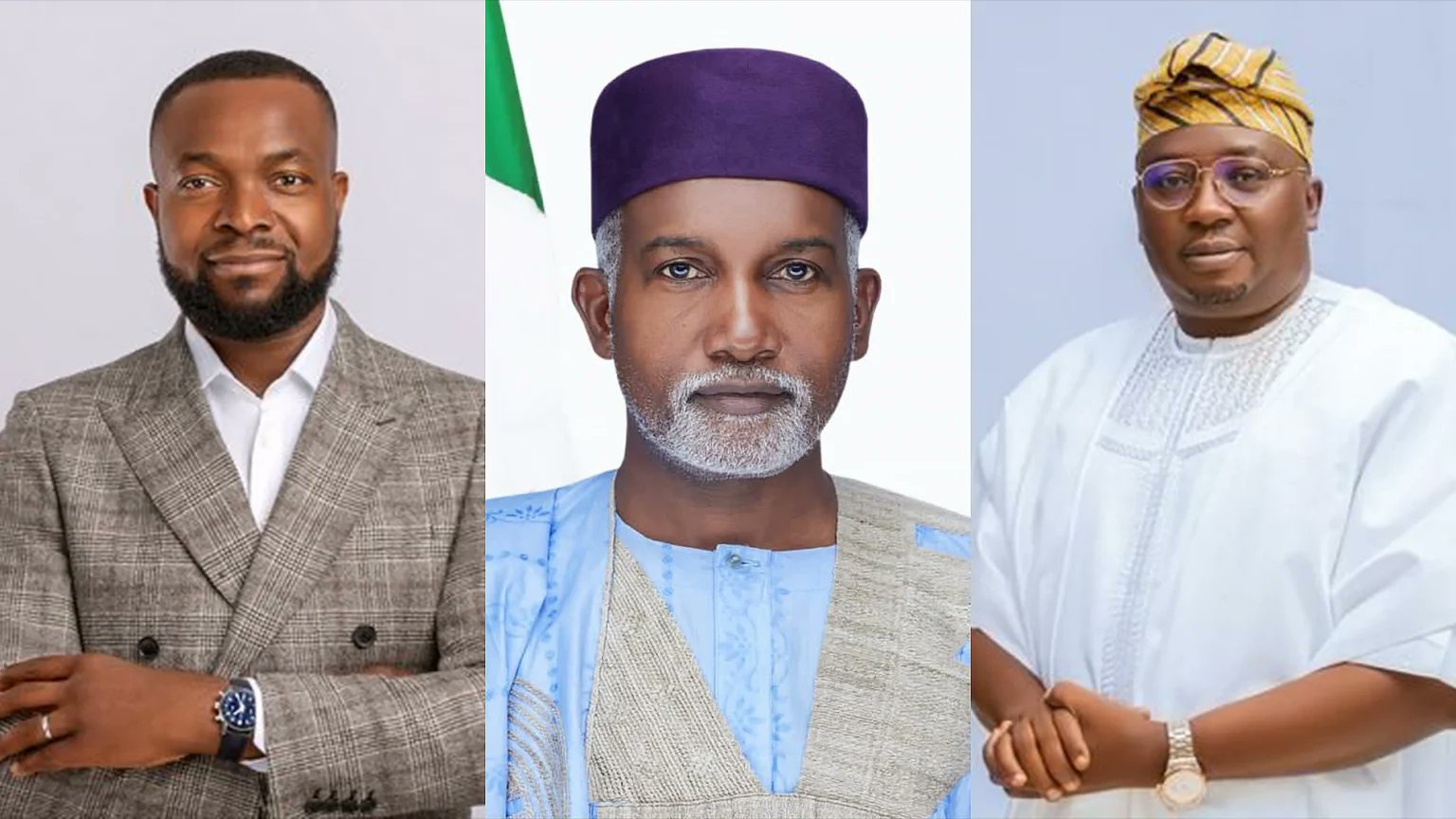
Among those likely to make the move is the Minister of Power, Adebayo Adelabu, who is expected to rejoin the race for the Oyo State governorship. Similarly, the Minister of Health and Social Welfare, Muhammad Ali Pate, is being linked with the governorship contest in Bauchi State, where the Minister of Foreign Affairs, Yusuf Maitama Tuggar, is also believed to be nursing similar ambitions.
In the South-East, Nkeiruka Onyejeocha, Minister of State for Labour, may either return to the National Assembly or seek the governorship seat of Abia State. For Borno State, the Minister of Agriculture, Abubakar Kyari, is widely speculated to be preparing for a governorship bid, while Saidu Ahmed Alkali is linked to the race in Gombe State.
Also on the radar is the Minister of Communications and Digital Economy, Bosun Tijani, who may test his popularity in Ogun State. In Plateau State, the Minister of Humanitarian Affairs, Bernard Doro, is reportedly eyeing a senatorial seat, while Ekperikpe Ekpo is projected to join the governorship race in Akwa Ibom State.
Most of these ministers are expected to step down before the commencement of party primaries, scheduled between April 22 and May 20, 2026, in compliance with electoral guidelines and party requirements.
Also linked to the 2027 governorship ambition in Kwara State are the Director General of the National Orientation Agency (NOA), Issa Onilu; the Director General of the National Institute for Legislative and Democratic Studies (NILDS), Abubakar Olanrewaju Suleiman; and the Pro-Chancellor of the Federal University of Health Sciences, Ila Orangun, Wale Sulaiman.
The possible obstacles and advantages
For Adelabu, his ambition would immediately confront a combination of political, structural, and perception challenges capable of defining the trajectory of his campaign long before the general election.
At the centre of these hurdles is the dominance of Governor Seyi Makinde and the entrenched structure of the Peoples Democratic Party (PDP) in the state. Although Makinde will complete his tenure before the election, his influence over party succession and grassroots mobilisation remains formidable. Any PDP candidate emerging with his backing would inherit an already functional political machinery, placing Adelabu at a structural disadvantage from the outset.
Equally significant are internal divisions within the All Progressives Congress (APC) in Oyo State. Years of factional disputes have weakened party cohesion, and Adelabu’s shifting political alignments, from APC to Accord Party and back, may fuel resistance among party stakeholders.
Securing the APC ticket could therefore become his first major battlefield, especially against strong aspirants with established grassroots networks and longstanding party loyalty.
The most defining challenge lies in the public perception of his performance as Minister of Power. Nigeria’s electricity sector remains one of the most sensitive governance issues, directly affecting households and businesses.
Zoning politics also complicates his path. While Adelabu is from Ibadan, the state’s dominant political bloc, growing agitation from Oke-Ogun, Ogbomoso and Oyo zones for power rotation could reshape party calculations and weaken consensus around another Ibadan candidate.
Beyond party primaries, Adelabu must also rebuild trust among voters following previous electoral defeats and political realignments, while countering any anti-federal sentiment that may arise from economic pressures linked to the ruling party.
Ultimately, Adelabu’s challenge extends beyond contesting an election; it involves reconciling party factions, defending his ministerial record and constructing a persuasive narrative capable of overcoming the PDP’s entrenched dominance in Oyo politics.
He will also contend with names such as Adebo Akande, Adegboyega Adegoke, Nureni Adeniran and Niyi Aborisade, all seen as figures capable of inheriting Makinde’s political base if backed by the governor.
For Adelabu within the APC, contenders such as former governorship candidate Teslim Folarin, House of Representatives member Remi Oseni, former deputy governor Rauf Olaniyan and erstwhile Minister of Communications Adebayo Shittu are also strong aspirants. Other hopefuls, including Azeez Adeduntan, Akeem Agbaje and Saheed Oladele, are mobilising support, while Senator Sharafadeen Alli is frequently mentioned in ongoing consultations.
If Pate resigns to pursue the 2027 governorship in Bauchi State, he will face steep political headwinds despite his strong technocratic profile.