








BY

BOLAJI AFOLABI
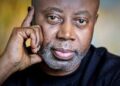
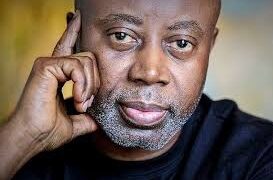
Wednesday April 8, a few minutes to six in the evening, while putting final preparations to a three-day trip, the phone beeped. First thought; it could be an advisory from friends or family members on the need for vigilance as a result of the shenanigans perpetrated by notorious bandits on major highways across the country. How wrong! The WhatsApp message was an invite from the irrepressible, inimitable Dapo Olorunyomi – fondly called Dapsy, and Uncle Dapsy by friends, colleagues, and mentees. The carefully worded, simple looking but aesthetically beautiful card was to attend a Symposium in honour of Dr. Chido Onumah; a serial award winner, versatile journalist, rights activist, published author on his 60th birthday. Though the writer does not have any personal relationship with the celebrant, but to have Olorunyomi as the Chief Host speaks volumes about the credibility, integrity, and stewardship of Onumah.
The clash of the timings of both events – Onumah’s and the trip, was not a good discovery by the writer. Thoughts of missing out on an occasion that will see the convergence of heroes and heroines of civil society and journalism; who as true activists and professionals sacrificed selflessly for democracy and good governance in the ’80s and ’90s, was painful. Given the importance of the trip, one had to communicate to Olorunyomi reason for not attending the unique event. Though not physically present, the coverage of proceedings by national newspapers, electronic media, and numerous online media platforms was useful. Perhaps, the choice of a national discourse to celebrate an ideologue who, for over three decades has weaved every of his life odysseys on fairness, probity, justice, ethics, and morality is fitting and proper.
William Shakespeare, in one of his timeless books, ‘Hamlet’ wrote; “this above all, to thine own self be true.” Here, humanity is advised to be honest, truthful, and pursue self-dignity. Indeed, honesty with oneself provides light and equanimity. From the testimonials of people, this encapsulates Onumah; who pursues wholeheartedly whatever he believes in, and stays focused even if he is the last man standing. Conscious that honesty is a wealth that doesn’t wither with time, as it attracts respect, trust, and belief from people, he clothes himself with these virtues which brings greatness. In many ways, his attributes, activities, and contributions to life and humanity confirm Shakespeare’s words in ‘Twelfth Night’ that, “be not afraid of greatness. Some are born great, some achieve greatness, and some have greatness thrust upon them.” No doubt, with the right attitude, hard work, and fidelity, Onumah has achieved greatness in diverse ways.
From reports, the symposium, themed, “Formation or Nation Building: Nigeria’s Quest for a Modern Federal Republic” which took place at the historical Shehu Musa Yar’Adua Centre, Abuja, was graced by many notable personalities from the media, academics, public service, and politics from far and near. Comments by many people attested to his unwavering commitment to the attainment of good governance, and unrestrained passion for national development. His loyalty to friendship and relationships were variously highlighted. Mallam Nuhu Ribadu, the National Security Adviser, who was the Special Guest of Honour said, “Chido is special and means a lot to me. He was part of my life at the most critical moments, and (he) went through the most difficult period with me.” His Excellency, Dr. Kayode Fayemi, former Governor of Ekiti State, who chaired the event, acknowledged Onumah’s sacrificial, and consistent contributions to the fights against military rulership, and the country’s struggles for democracy.
Generally described as a people’s man who is largely accessible, reliable, and dependable, Onumah is deeply loved for his courage, commitment, and consistency in pursuing noble causes that will improve the general well-being of the people. Imbued with an uncommon indomitable spirit, he is a perfect exemplar of true social activism built on principles, high moral standards, and selflessness – million miles different from what we have these days. Without a doubt, he remains one of the best, and has carved an enviable niche for himself as the compass for assessing activists in Nigeria. Not driven by pecuniary benefits, showmanship, and human accolades, his penchant for cross-fertilization of ideas, and public discourse; at all times geared towards ensuring national cohesion, growth, and development remains unequivocal. This may have further informed the choice of a symposium to mark his landmark birthday.
Onumah’s professional resume, human interests-driven calling, and development engagements are replete with qualitative services within the country, in Africa, Europe, and the United States of America. As a journalist, though he started out with The Guardian newspapers, Onumah, at various times was at Sentinel Magazine – late Dr. Stanley Macebuh was the Managing Director; The News Magazine; AM News; Thisday Newspapers; Weekly Insight, Ghana, as the Associate Editor; Africanews Service, Kenya; and African Observer, New York, USA. For decades, Onumah has emerged as a prominent figure, and major voice in media and information literacy.
As the Co-ordinator of the African Centre for Media & Information Literacy (AFRICMIL) – he has been able to promote media literacy to foster democracy, accountability, good governance, and combat misinformation in Africa through research,advocacy, and training programmes. To expand the frontiers of excellence, he co-founded the Media & Information Literacy and Intercultural Dialogue (MILID) Foundation, with special emphasis on media literacy in governance and education. Through AFRICMIL, and the Yar’Adua Foundation, Onumah launched the Corruption Anonymous (CORA); a whistleblowing platform to facilitate anonymous reporting and bolster accountability in governance.
Given his passion for good governance, Onumah, through the Whistleblowing Advocacy Coalition of West Africa (WACOWA); and the Advocacy for Whistleblowers Protection Laws has covered parts of the continent. Appreciable mileage has been achieved towards regional cooperation on whistleblower protection; adopting the policy as a veritable instrument for exposing crimes; and deepening governance across Africa. Similarly, Onumah’s broad-based advocacy and activism are well documented through his involvement with numerous bodies such as the West African Human Rights Committee (WAHRC); Pan-African Alliance for Media and Information Literacy (PAMIL); Global Alliance for Partnerships on Media and Information Literacy (GAPMIL); Whistleblowing International Network (WIN); United Nations Educational Scientific Cultural Organization (UNESCO); and the Panos Institute, USA.
Indeed, Onumah’s decades-long involvement, contributions to Nigeria’s democratic journey, and the emplacement of probity in the public service deserves mention. He functioned as the Head, Civil Society Unit; and Coordinator, Fix Nigeria Initiative at the Economic and Financial Crimes Commission (EFCC), under the Chairmanship of Ribadu. He, among other things contributed to drafting templates that translated international anti-corruption laws into accessible tools for citizens; collaboration with various groups on integrity and accountability; training of journalists in investigative reporting; and workshops for judges, law enforcement agencies, and the media.
His varied contributions to the media, human rights, democracy, and good governance has earned him several local and global recognitions including the Kudirat Initiative for Democracy Awards; William C. Heine Fellowship for International Media Studies; Jerry Rogers Writing Award; and the Clement Mwale Prize for Courage. Despite his busy schedules, Onumah has authored some books including Time To Reclaim Nigeria; Nigeria Is Negotiable; and We Are All Biafrans. Many of his friends, colleagues, and associates applaud his de-tribalized credentials; described as a true nationalist. Born on the 10th of April, 1966, Onumah attended the Army Children School, Apapa; and Awori Ajeromi Grammar School, Lagos. He graduated from the University of Calabar with a B.A Philosophy. He earned his Masters and Doctorate degrees in Journalism, and Communications & Journalism at the University of Ontario, Canada, and the Universitat Autonoma de Barcelona, Spain, respectively.
• BOLAJI AFOLABI, a Development Communications specialist was with the Office of Public Affairs, The Presidency, Abuja.