













By Abdul Suleiman

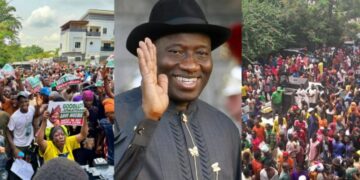
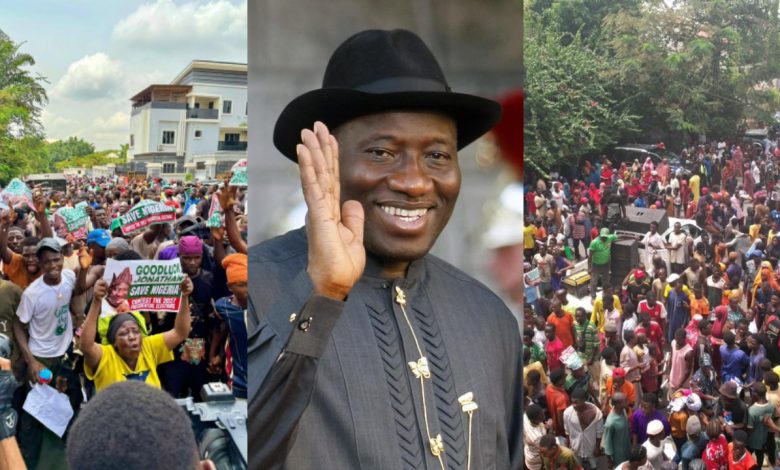
As conversations around the 2027 presidential race gather momentum, a growing number of political observers, civic leaders, and grassroots groups are pointing to former President Goodluck Jonathan as the figure best placed to restore stability and national unity.
The renewed interest follows months of public debate about leadership, experience, and the kind of direction Nigeria needs as it faces economic and security challenges. For many, Jonathan’s name keeps coming up for one reason: his proven record of measured leadership and broad national appeal.
A Call for Steady, Unifying Leadership
Supporters argue that Nigeria is at a moment where calm, inclusive, and experienced leadership is needed most. They point to the pressures of inflation, insecurity, and public distrust that have weighed on the country in recent years.
“It’s the responsibility of all well meaning Nigerians to encourage him to run,” said a supporter in Abuja. “We need a leader who can calm tensions, bring people together, and restore confidence in the system.”
To them, Jonathan represents that bridge a leader with national recognition, cross-regional relationships, and firsthand experience managing Nigeria’s complex federal structure.
Experience That Matters in 2027
Proponents highlight Jonathan’s presidency from 2010 to 2015 as a period marked by political predictability and respect for democratic norms. His concession in 2015 is still cited as a defining moment that strengthened Nigeria’s democracy and earned him respect both at home and abroad.
“That act showed statesmanship,” said a political analyst in Kaduna. “In 2027, Nigeria needs someone who can build coalitions, push through reforms, and address security concerns without deepening regional divides.”
Supporters believe that with the lessons of his first tenure, a returning Jonathan would be better equipped to navigate coalition building, economic recovery, and national reconciliation.
The Four-Year Advantage: Balancing Power Between North and South
A key argument gaining traction is the “four-year advantage.” Because Jonathan has already served one term as an elected president, supporters say he can run for only one additional term of four years.
They argue this offers a clean, time bound path to balance power between the North and South. With the North having held the presidency for eight years under Buhari and completing the cycle under the current administration, a single-term Jonathan presidency would return power to the North in 2031 without triggering prolonged regional tension.
“It’s the most practical way to reset the zoning equation,” said a political observer in Abuja. “Four years of stability now, then a smooth transition back. Everyone gets certainty.”
For many, this makes Jonathan a compromise candidate who can unite the country without prolonging the debate over regional equity.
A Vision for Economic Recovery and Unity
Backers of the Jonathan push frame his potential candidacy as a response to the yearning for stability and shared prosperity. They argue that the country cannot afford another cycle that amplifies division.
“The country needs a leader who can speak to both the North and South with credibility,” the Kaduna analyst added. “Someone who can focus on growth, jobs, and security without being seen as partisan.”
Contrasting the Record Ahead of 2027
Since 2015, the All Progressives Congress, APC, has overseen a period marked by global shocks, including COVID-19 and volatile oil prices. While the administration points to infrastructure projects, social investment programs, and efforts to diversify the economy, critics and civil society groups say the gains have not translated into broad based prosperity.
“Power should bring prosperity,” noted a political observer in Abuja. “Many Nigerians are looking for a reset that prioritizes people, stability, and opportunities.”
For supporters of Jonathan, that reset is possible through a leader with national goodwill and experience in managing Nigeria’s diversity.
The Road Ahead
Jonathan has not formally declared his intention to run. His office maintains that he remains focused on peacebuilding and international engagements across Africa.
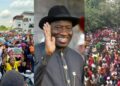
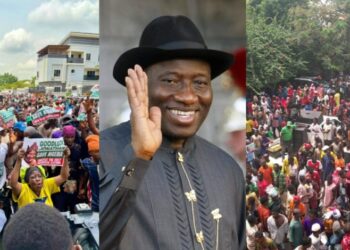
Still, momentum is building. Posters, online campaigns, and consultations in the North, Abuja, and across the South-South have kept his name in the public conversation.
Legal questions around eligibility are before the Federal High Court in Abuja, and observers say the outcome will be key as parties move toward primaries.
For those calling on him to run, the message is clear: in 2027, Nigeria needs a unifying figure with experience and national reach.
“This is not about looking back,” one supporter said. “It’s about giving Nigeria a chance to move forward together.”
Abdul Suleiman wrote this piece from Kaduna