

















Nigeria’s 2027 general elections are gradually taking shape, and emerging political realignments suggest that the contest may be more competitive than ever. One of the most significant developments is the growing conversation around opposition coalition-building, particularly within and around the African Democratic Congress (ADC), as Nigerians increasingly seek a credible alternative to the ruling All Progressives Congress (APC).

The logic behind coalition politics is simple: fragmented opposition benefits an incumbent government. The 2023 presidential election clearly demonstrated this reality. Collectively, opposition candidates commanded a formidable vote share that, if consolidated, could have decisively altered the outcome. Atiku Abubakar of the PDP polled approximately 6.98
million votes, Peter Obi of the Labour Party secured about 6.1 million votes, while Rabiu Musa Kwankwaso of the NNPP garnered roughly 1.5 million votes—a combined total of over 14.5 million votes. This numerical reality continues to fuel the argument that unity, rather
than fragmentation, is the opposition’s most potent weapon going into 2027.
Since the assumption of office by the APC-led federal government in 2023, Nigeria has faced deepening socio-economic challenges. Rising inflation, worsening poverty indicators, persistent insecurity, controversial fiscal and tax policies, institutional strain, and widespread youth disenchantment have intensified public dissatisfaction. These conditions have strengthened the argument that a broad-based opposition coalition stands a realistic chance of winning power in 2027—provided it is well-led, disciplined, and strategically coordinated.
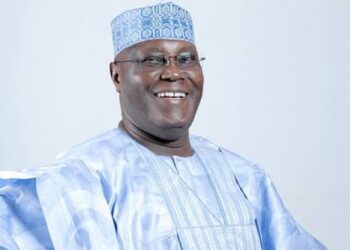
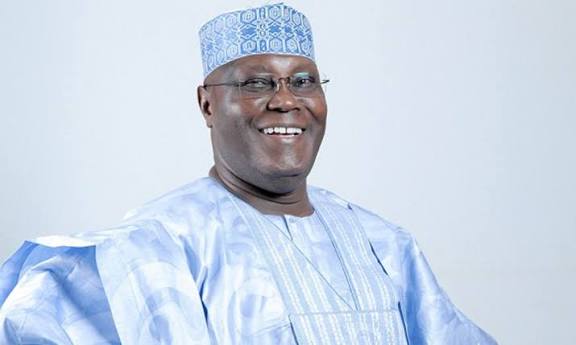
Within this context, Atiku Abubakar stands out as a stabilizing and unifying figure capable of providing the leadership such a coalition requires. As a former Vice President with decades of political experience and an extensive national network, Atiku brings institutional knowledge, political maturity, and electoral reach that few contenders can match. His longstanding advocacy for
economic liberalization, private-sector-led growth, women’s inclusion, and youth empowerment aligns with many of the aspirations of a population eager for reform-driven governance.
Importantly, Atiku’s consistent call for credible internal democracy, including transparent and competitive party primaries, reinforces his democratic credentials. In an era where imposition of candidates and elite consensus politics have weakened public trust—particularly within the APC—this stance resonates strongly with Nigerians who desire
fairness, accountability, and legitimacy in political processes.
Electorally, Atiku’s influence in the North remains a crucial strategic factor. The APC’s success in 2023 was significantly anchored on northern vote dominance. Any serious opposition challenge in 2027 must recalibrate this equation, and an Atiku-led ticket remains one of the few
configurations capable of substantially altering northern voting patterns while still appealing nationally.
Beyond politics, Atiku also brings extensive organizational capacity—financial, logistical, and strategic—developed over more than three decades in public life. These assets are indispensable for sustaining a nationwide campaign, protecting votes at polling units, and ensuring effective coordination across states.
Historically, the Obasanjo-Atiku administration (1999–2007) remains one of Nigeria’s most economically impactful periods since the return to democracy. During that era, Nigeria achieved debt relief, macroeconomic stabilization, institutional reforms, and the
establishment of key regulatory bodies. Atiku’s role as Chairman of the National Economic Council and head of the Presidential Economic Team was central to those reforms, reinforcing perceptions of his economic competence.

Against this backdrop, discussions around a possible Atiku–Obi political understanding continue to attract national attention. While no formal arrangement has been publicly
confirmed, the strategic logic is evident. Such an alliance would harmonize northern electoral strength with the youthful, reform-oriented support base that Peter Obi commands, particularly in southern Nigeria and among urban voters.
Peter Obi represents a powerful political asset whose value is arguably maximized within government rather than in perpetual opposition. His age, credibility, and reformist image position him as a long-term national leader. A carefully negotiated political transition—one that balances experience with generational renewal—could offer Nigeria both immediate stability and future continuity. Discussions around term limits, zoning sensitivities, and power rotation remain political considerations rather than settled outcomes, but they underscore the need for strategic compromise.
Ultimately, the road to victory in 2027 will be complex marked by competing ambitions, intense negotiations, and inevitable betrayals. Success will depend on disciplined strategy, emotional restraint, and a clear-eyed assessment of national interest over personal ambition. For the ADC and its allies, the election can only be won through unity, inclusiveness, and a leadership structure that inspires confidence across Nigeria’s diverse regions and demographics.
Anything short of a cohesive, well-negotiated coalition risks repeating the mistakes of 2023—mistakes that Nigerians burdened by hardship can ill afford. The stakes are national, and the moment calls for courage, compromise, and clarity of purpose.
Engr. Arabome Paul (MSPE, MNMGS, MPMI)
Chieftain and staunch member of the ADC
Writes from North America