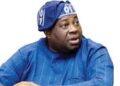







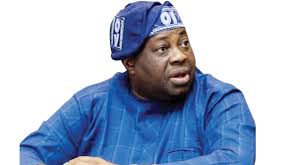










Ahead of the 2027 general elections, Ovation publisher and political commentator, Dele Momodu, has cautioned the African Democratic Congress (ADC) against internal conflicts that could undermine its emerging opposition coalition.
In a post on X on Tuesday, Momodu reflected on his participation at a 2025 meeting in Abuja where opposition parties rallied around the ADC as a platform to challenge the ruling All Progressives Congress (APC).
“I was most elated hearing these beautiful words,” Momodu wrote. “I was happy to see an Army veteran and General David Mark as Chairman, knowing he would brook no nonsense. But in recent time, some groups have introduced aggression and rambunctiousness into a fledgling cooperation.”
He questioned attempts by certain blocs to impose candidates without due process. “How can a coalition work if some groups insist they must produce the top ticket by donation and coronation, without election or persuasion?” he asked.
Momodu warned that unless discipline is enforced early, the ADC risks a repeat of the internal strife that plagued the Peoples Democratic Party (PDP), citing how former Rivers State Governor, Nyesom Wike, consolidated power within the party.
“ADC should be a party of love and not a Fuji house of commotion,” he said.
His warning comes amid renewed clarifications by the Obidient Movement Worldwide, which has insisted that former Anambra State Governor, Peter Obi, will not accept a vice-presidential slot in any political arrangement.
The movement stressed that its support within the ADC is solely for Obi’s emergence as Nigeria’s president in 2027, following his recent defection from the Labour Party.
The Guardian recalls that Obi had earlier left the PDP for the Labour Party ahead of the 2023 elections, where he emerged as the party’s presidential candidate.
Speaking on Eagle 102.5 FM’s Frontline programme, the National Coordinator of the Obidient Movement, Dr Tanko Yunusa, dismissed claims that Obi’s alignment with the ADC signals subservience to former Vice President Atiku Abubakar or any other political figure.
“Everybody that was in that particular coalition contributed to it with their hard-earned money. Nobody owns that political party, please, and please, don’t get it wrong,” Yunusa said.
He described Obi as a candidate capable of offering what the movement calls a “moral solution” to Nigeria’s leadership challenges, highlighting priorities such as economic discipline, national security, and sustainable fuel subsidy reforms.
On foreign policy, Yunusa said Obi would engage Nigerians first while restoring international respect for the country. “The people of Nigeria are the ones that Mr Peter Obi will interface with as a gentleman. He will also link up with the international community to ensure they give Nigeria the respect it deserves,” he said.
Addressing criticisms over Obi’s frequent party switches, Yunusa argued that structural sabotage within the Labour Party made continued participation impossible.
“Forces in power deliberately undermined the party’s functionality. If your house is being deliberately set on fire, would you remain inside it? There was a calculated attempt to destroy what was being built,” he said.
Yunusa added that Obi’s decision to join the ADC followed extensive consultations with reform-minded groups across the country, noting that young Nigerians remain central to his political movement.
“Ordinarily, Peter Obi would flow with the people who are calling for him. The youths are the deciders,” he said.
On speculation about a vice-presidential role, Yunusa was emphatic: “Politics has no permanent enemies, only permanent interests. The interest here is good governance, and Peter Obi represents that.”
He also reaffirmed Obi’s one-term pledge, stating that if elected in 2027, he would complete the remaining four years of the South’s turn and hand over power to the North in 2031, describing the commitment as a demonstration of national unity and credibility.
The Obidient Movement said it would participate fully in a transparent ADC presidential primary and warned that it would act collectively with Obi if the process is compromised.
As the 2027 elections draw closer, Obi’s positioning within the ADC, combined with Momodu’s warning, highlights growing tensions around coalition management, party discipline, and competing ambitions within Nigeria’s opposition landscape.