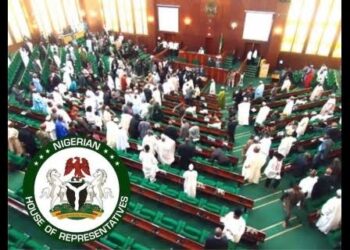
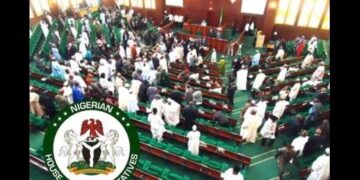
















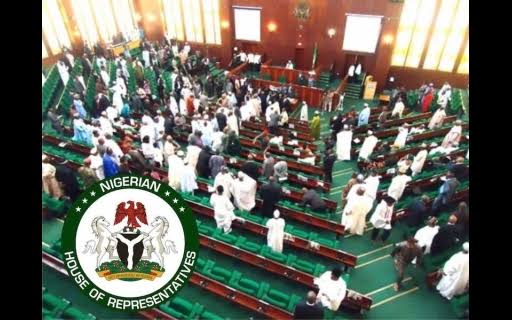


The House of Representatives on Thursday passed the second reading of the Federal Government’s N58.47 trillion 2026 appropriation bill, moving the country closer to finalising next year’s spending plan.
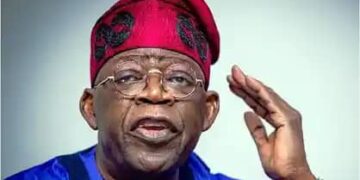
The Majority Leader, Julius Ihonvbere, representing Owan Federal Constituency, presented the bill’s general principles during plenary, describing it as part of a long-term plan to ensure peace, growth, stability, and sustainable development in Nigeria. He noted that true development must be sustainable, stressing that temporary progress is not enough.
Ihonvbere told lawmakers that managing Nigeria’s economy is a difficult task, given inherited structural, social, and economic challenges. He urged legislators to support the executive while ensuring accountability, highlighting President Bola Tinubu’s foreign engagements, including a recent visit to Turkey, a key economic partner.
The majority leader also cited positive economic indicators underpinning the 2026 budget. He said the naira had stabilised from over N1,800 to about N1,400, Nigeria had not printed money since Tinubu assumed office, and external reserves had risen to approximately $46 billion, enough to cover over 10 months of imports.
He outlined government commitments, including better budget discipline, stronger revenue performance, effective debt management, human capital development, and improved business environments, saying the budget reflects the government’s vision for a socially, politically, economically, and culturally prosperous Nigeria.
“Progress made today will benefit future generations and encourage successive governments to build on our achievements, prioritising the welfare and security of women and children,” Ihonvbere said.
After the presentation, Speaker Tajudeen Abbas called for a voice vote. The bill passed second reading without debate or opposition, signalling strong legislative support.
The 2026 budget, presented by President Tinubu on December 19, 2025, allocates funds as follows:
Statutory transfers: N4.09 trillion
Debt servicing: N15.91 trillion
Recurrent (non-debt) expenditure: N15.25 trillion
Development fund for capital projects: N23.21 trillion
Earlier, on December 18, the House approved the 2026–2028 Medium-Term Expenditure Framework (MTEF) and the Fiscal Strategy Paper (FSP).
The chamber endorsed projected crude oil prices of $64.85, $64.30, and $65.50 per barrel for 2026, 2027, and 2028, respectively, while the Senate revised 2026’s benchmark price downward to $60 per barrel.
Other projections adopted include:
Domestic crude oil production: 1.84 mbpd (2026), 1.88 mbpd (2027), 1.92 mbpd (2028)
Exchange rates: N1,512 (2026), N1,432.15 (2027), N1,383.18 (2028)
Inflation rates: 16.5% (2026), 13% (2027), 9% (2028)
GDP growth rates: 4.68% (2026), 5.96% (2027), 7% (2028), reflecting anticipated gains from tax reforms and economic initiatives.
The passage of the second reading marks a significant milestone as the National Assembly moves closer to finalising Nigeria’s largest-ever budget, which aims to drive infrastructure growth, economic stability and social development in the coming years.