













By Dr A. Ephraim
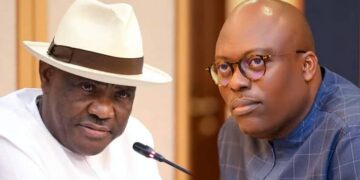
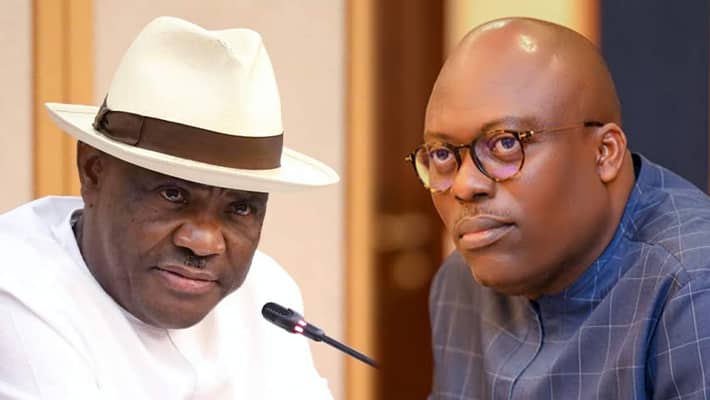
Politics is often described as a game of chess, not draughts. It rewards patience, foresight, and the ability to see beyond immediate victories. In the ongoing political tension between Minister Nyesom Wike and Governor Siminalayi Fubara, this truth has never been more relevant. If I were Wike, I would pause, reflect deeply, and choose the path of reconciliation—not confrontation—because, in the long run, Wike has far more to lose than to gain.
Wike is not a small political figure. He is a former governor, a national political force, and currently a minister in the federal cabinet. Few politicians in Nigeria can boast of his political structure, influence, and visibility. Naturally, with such stature comes ambition. Many already see 2031 as a possible destination in Wike’s long-term political journey at the federal level. But ambition, no matter how legitimate, must be protected with wisdom. Burning political bridges—especially in one’s home base—is one of the fastest ways to weaken a future dream.
The truth is simple: prolonged hostility with Fubara damages Wike more than it damages Fubara. Governors come and go, but political legacies endure—or collapse—based on how power is managed after office. History is unkind to political godfathers who appear unable to let go, and even harsher to those who are seen as destabilizing their own political house. If the Rivers political structure fractures permanently, Wike’s influence risks becoming regional memory rather than a living force.
A united front, on the other hand, is a win-win for both men.
It is important to understand that both leaders are operating on different political timelines. Governor Fubara is clearly focused on 2027 at the state level—consolidating governance, stabilizing Rivers State, and securing his political future within the state. Wike, however, is thinking beyond Rivers, possibly toward 2031 at the federal level. These ambitions do not have to clash; in fact, they should complement each other. Fubara’s success in Rivers strengthens Wike’s credentials nationally, while Wike’s continued influence and protection of the Rivers political structure strengthens Fubara’s path to 2027.
If Wike supports Fubara genuinely, he secures loyalty, relevance, and continuity. He reinforces the narrative that he is a builder of leaders, not a destroyer of successors. That image matters—locally, nationally, and historically. National ambition is not built only on strength; it is built on perception, alliances, and goodwill. Every unnecessary conflict chips away at that carefully built capital.
For Fubara, supporting and respecting Wike is not weakness; it is political intelligence. It is already evident that Fubara respects and openly acknowledges Wike’s role in his emergence. That acknowledgment should not just be symbolic; it should be consistent and clear. Respect does not mean surrendering authority—it means honoring political reality. When a sitting governor recognizes the contributions of his predecessor, it calms tensions, reassures supporters, and stabilizes governance.
There is also a bigger picture that must not be ignored: the President is a political tactician. He is watching. He knows exactly what is going on. Power at the centre never operates in ignorance, especially when political turbulence threatens smooth governance. Any former governor can be called to question on the accountability of his previous tenure. Some may call it victimisation, but politics is rarely sentimental—it is pragmatic. When the actions of a political actor are perceived to threaten stability or smooth sailing, institutions have a way of responding. That is simply the reality of power.
The experience of Dr. Peter Odili should serve as a sobering reminder. Odili was once one of the most powerful governors in Nigeria, commanding immense influence and national relevance. Yet political tides changed. Federal power shifted, alliances weakened, and accountability questions followed. Whatever interpretation one chooses—justice, politics, or victimisation—the lesson remains clear: no former governor is beyond scrutiny, and influence without alignment can quickly become vulnerability. Political shelter matters, and it is best preserved through cooperation, not confrontation.
Political wisdom profiteth. Knowing when to pull back is as important as knowing when to advance. Knowing when to make peace is often more powerful than winning a fight.
The irony is that both men need each other more than they may want to admit. Wike needs Fubara to keep his political base intact, relevant, and loyal. Fubara needs Wike’s experience, network, and political weight as a stabilizing force. Separation weakens both; cooperation strengthens both.
If I were Wike, I would choose legacy over ego. I would remember that political power is seasonal, but reputation is permanent. I would invest in Fubara’s success, knowing that a successful Fubara administration reflects positively on the man who brought him forward. I would act as a statesman, not a faction leader.
History is watching. Power is watching. Fubara is watching 2027, and Wike is eyeing 2031. The road to tomorrow is not paved with grudges but with strategic partnerships. Peace between Wike and Fubara is not surrender—it is strategy. It is not loss—it is consolidation. In the end, wisdom—not force—will determine who truly wins.
Dr A Ephraim was Former Personal Physician to Col Shehu, Gp Capt Sam Ewang & Dr Peter Odili in Rivers State.