



















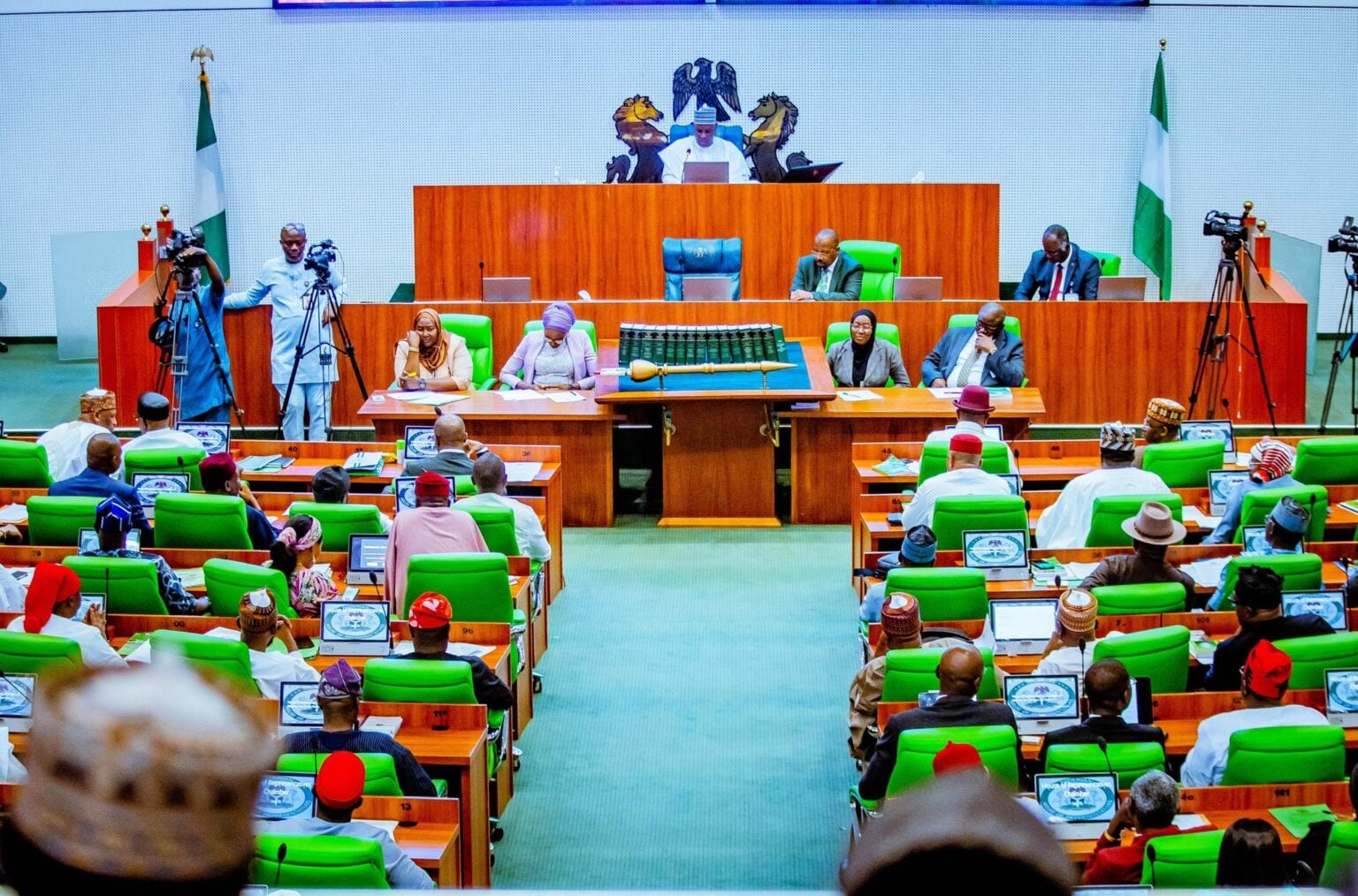


The house of representatives says reports of a minority caucus an ad hoc committee reviewing the tax reform laws and issuing an interim report do not represent a formal parliamentary process.
Last Friday, the minority caucus committee, chaired by Afam Ogene, an Anambra lawmaker, said it discovered “illegal” alterations in the gazetted copies of the tax reform laws.
Ogene, chairman of the seven-member committee set up by the minority caucus to probe the alleged alterations, said a review of the acts showed that different versions were in circulation.
He added that preliminary findings, based on a comparison of the certified true copies (CTCs) released by the house and the gazetted copies, indicated that the laws had been altered.
However, in a statement on Sunday, Akin Rotimi, spokesperson of the lower chamber, said only the house sitting in plenary or the speaker has the authority to constitute an ad hoc committee with parliamentary status.
“No political caucus, whether majority or minority, possesses the procedural authority to establish a committee that carries the status of a parliamentary body,” Rotimi said.
“Any action taken by a caucus in this regard is therefore non-binding, informal, and without legal or institutional consequence.”
Rotimi said any committee set up outside the prescribed procedures “lacks institutional recognition” within the house.
According to him, any interim or final report produced by a caucus-led body “cannot be laid before the house, cannot be received as a parliamentary document, and does not form part of the official legislative or oversight record of the national assembly”.
He said the reported action of the minority caucus was inconsistent with parliamentary norms and capable of misleading the public, especially as issues around the tax laws had already been addressed through established legislative processes.
Rotimi also recalled that in December 2025, the house constituted a bipartisan ad hoc committee following concerns raised by an opposition lawmaker over multiple documents presented as official gazettes.
He said the committee will submit a report to the house after its assignment, adding that the national assembly has gazetted tax laws and issued copies.
“The national assembly has also formally disowned and debunked any unofficial documents in circulation, reiterating that only the gazetted versions and duly certified copies issued by the national assembly constitute authentic legislative instruments,” Rotimi said.
He warned that the creation of a parallel caucus-led committee and the circulation of purported interim findings could deepen public confusion on an issue that had been “institutionally resolved and overtaken by events”.
Rotimi said the house remains committed to transparency and accountability but stressed that such goals must be pursued strictly within constitutional and procedural limits.
“For the avoidance of doubt, only committees constituted by the House in plenary or by the speaker have parliamentary authority,” he added.