




















• “Without Regime Change in Iran, There Are No Abraham Accords and No Economic Future for the Middle East” – Sam Shay

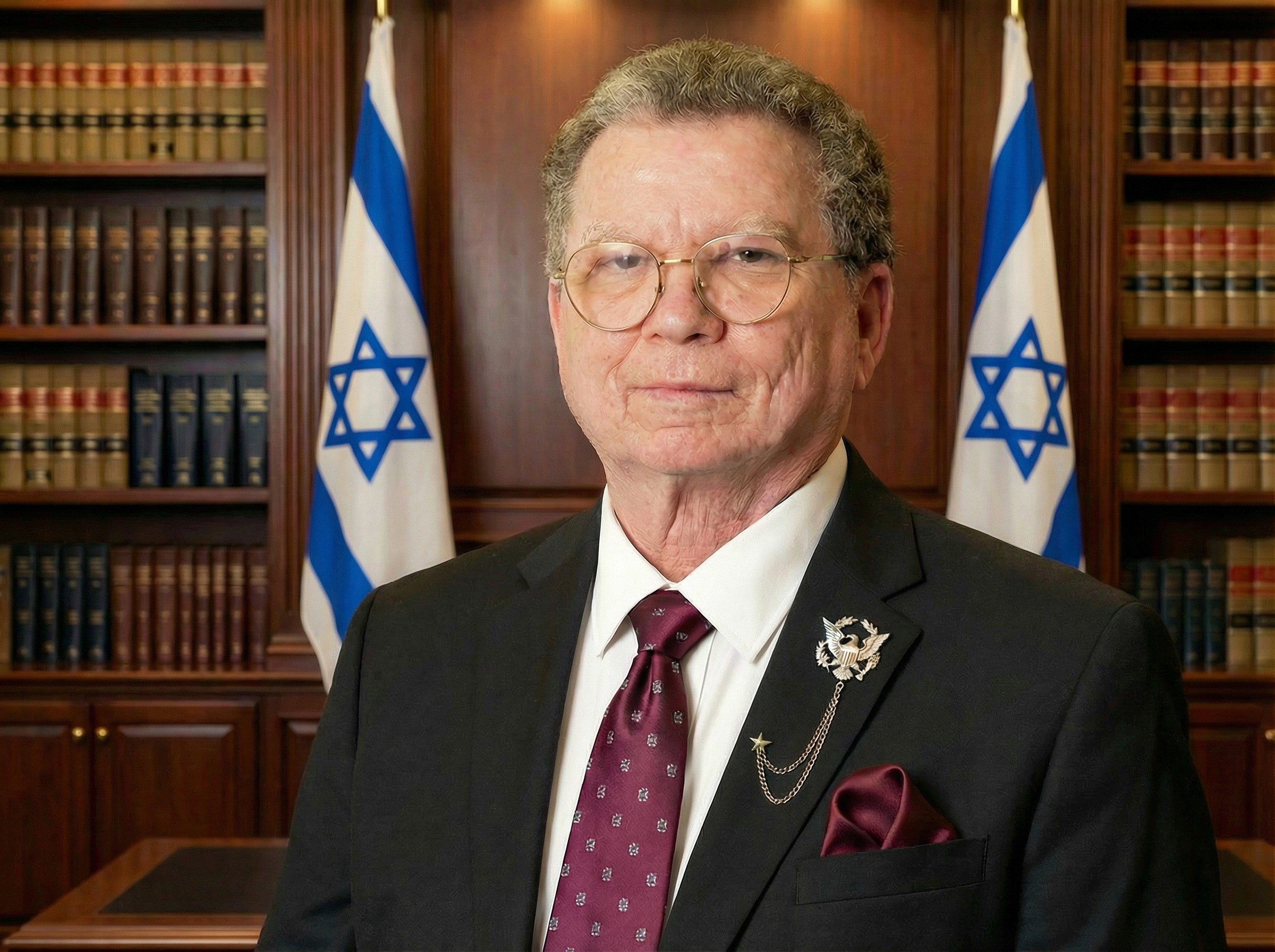
In a special interview we conducted with Samuel Shay, entrepreneur and senior economic advisor to the Abraham Accords, a sharp and uncompromising position emerges: as long as the ayatollahs’ regime rules Iran, the Abraham Accords cannot survive, and the regional economic vision promoted by the American administration will remain an illusion.
According to Shay, Donald Trump understood early in his term that the key to regional stability and economic prosperity runs through the Abraham Accords. The president acted decisively, opened channels with the Gulf states, advanced dialogue with Saudi Arabia and Qatar, created an open door toward leaderships in Syria and Lebanon, and even expanded the initiative toward distant Muslim countries such as Malaysia and Indonesia. A sense of historic momentum emerged, almost a geo economic celebration.
Then, Shay argues, reality exploded in his face. Iranian terrorism, through its proxies, sabotaged every attempt to build regional trust. Iran did not see the Abraham Accords as an opportunity but as a threat. Not only a political threat, but a direct threat to the very survival of a regime built on confrontation, fear, and terror.
According to Shay, this is where the central contradiction in American policy was exposed. On one hand, President Trump presented a tough line against Iran: economic sanctions, harsh statements, and even limited military actions coordinated with Israel. On the other hand, at the decisive moment, he retreated. Instead of going all the way and supporting regime change, the administration tried to combine threats with gestures, pressure with promises.

“The problem,” Shay says, “is that the ayatollahs’ regime interprets every gesture as weakness.” American assurances were not perceived in Tehran as genuine goodwill aimed at rehabilitation or regional integration, but as an opportunity to buy time. While the world spoke of peace, Iran continued to funnel money, weapons, and guidance to Hamas, Hezbollah, the Houthis, and other proxies across the Middle East and beyond. Even under sanctions, Tehran always finds a financial route.
Shay emphasizes that the attempt to persuade Iran to join a regional framework of peace was a strategic failure. “This is not a rational actor in the Western sense,” he says. “It is an ideological, extremist religious regime that sees the destruction of Israel and the destabilization of the region as objectives, not side effects.”
The military actions that were carried out, he argues, did not change the equation. They did not topple the regime, did not stop the terror project, and only deepened hostility. This created a dangerous situation of a last man standing game, without a clear end strategy.
In Shay’s view, the assumption that threats alone are enough to force submission simply does not work with Iran. “It worked with states, it worked with economic actors, but not with a regime that is willing to murder its own people and sanctifies death as a governing tool.”
His conclusion is unequivocal: if President Trump does not give a clear green light to Israel and regional partners to act to dismantle the ayatollahs’ regime, the Abraham Accords will collapse. There will be no regional integration, no investments, no economic corridors, and no stability. Instead, the vacuum will be filled with chaos, terror, and radicalization.
Beyond the region, Shay also warns of the historical implications. Failure to confront Iran will stain President Trump’s legacy and portray him as the leader who allowed terror to spread across the Gulf and the Middle East, precisely after opening a rare window of opportunity for peace.
“There are not many options left on the table,” he concludes. “This is a moment of decision. A fast and clear choice can save not only the Abraham Accords, but global stability itself. Further delay will only deepen the threat.”