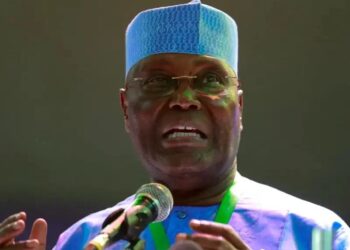























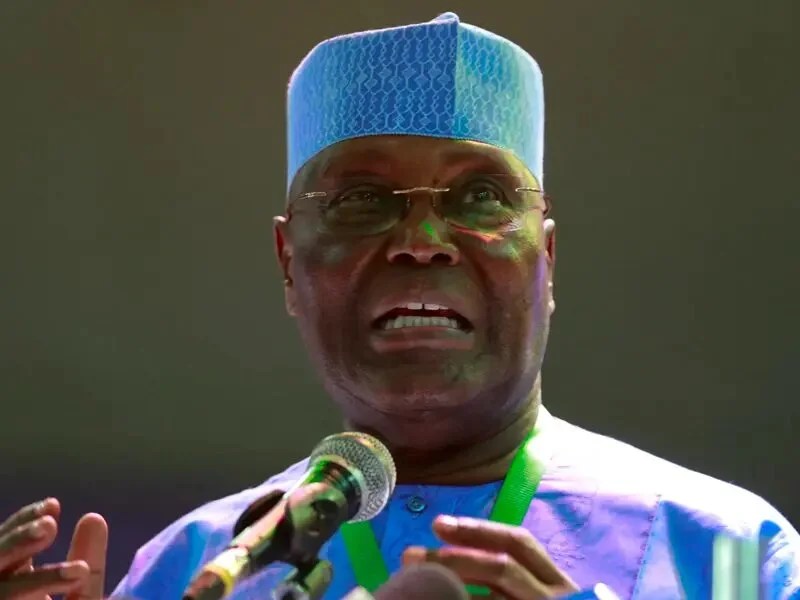

Critics may continue to throw stones, manufacture allegations, and fuel narratives driven by resentment, yet none of these will halt or diminish the resolve of Atiku Abubakar to remain in active politics.

Political opposition is expected in any democracy, but when it descends into persistent hostility and unsubstantiated claims, it reveals more about the critics than the man they seek to undermine. As Winston Churchill once said, “You will never reach your destination if you stop and throw stones at every dog that barks.” Hatred has never been a sustainable political strategy, nor has it proven effective against a figure whose career has been defined by endurance. This explains why Atiku Abubakar has chosen to remain silent over many barkings aimed at dampening his resolve.
It is true that Atiku Abubakar has been in the political arena since 1992, but longevity in itself is not a flaw. Rather, it reflects commitment, sacrifice, and a deep understanding of the nation’s evolving political landscape. It reveals a man who has not abandoned learning the nation.
Age, often used as a point of criticism, has not diminished his agility, clarity of thought, or coordination. On the contrary, it has strengthened his experience and sharpened his grasp of governance. In the words of Nelson Mandela, “A good head and a good heart are always a formidable combination”, and Atiku Abubakar has both.
Allegations have also trailed his name over the years, with critics quick to label him unfairly. Yet, in a system governed by law, accusations must be matched with proof and due process. Despite the noise on social media, beer parlors and elsewhere, there has been no conviction or definitive legal judgment that substantiates the stories often repeated in political circles. Rather he won his eleven cases all the times he was brought before the court of justice. A sitting vice president waived his immunity, allowed EFCC to investigate him on orders from above, and nothing was found against him. This echoes the principle famously expressed by Thomas Jefferson: “I would rather be exposed to the inconveniences attending too much liberty than to those attending too small a degree of it.”
The claim that he is desperate for power is another argument frequently advanced by opponents. However, history tells a more nuanced story. In 2003, when circumstances could have aligned in his favour, Atiku chose loyalty over ambition by standing with his principal, Olusegun Obasanjo. That decision speaks volumes about his character and restraint. As John Quincy Adams once noted, “If your actions inspire others to dream more, learn more, do more and become more, you are a leader.” I often wonder who in the presidential quest is a newcomer. They’ve all been there before, and their appearances are counting.
Some argue that he should step aside for younger contenders, but this raises a fundamental question about the nature of democracy. Leadership is not transferred by sentiment or age alone, but by competence, preparedness, and the will of the people. The political space is vast and accommodating; it is not a closed arena reserved for a select few. Younger aspirants are not excluded, they are equally empowered to step forward, organize, and contest. As Barack Obama once said, “The future rewards those who press on.” The path is open to all who are ready to walk it. When viewed strictly, men in their sixties should also be advised to step down for men in their thirties. We have presidents of nations who are in their thirties.
On zoning, we need to do the simple math from democratic rule which started in 1999. When micro zoned, three zones emerge as not having produced a president – the North East, the South East, and the North Central. The military era was undemocratic as we the people, did not vote them in. They seized power from two republics and had a Russian roulette of coups. The price for failed coup d’état is death. It is on record that the North suffered more casualties than the entire South.
Ultimately, those who resort to insults and distractions may continue to do so, but such tactics rarely influence discerning minds. Atiku Abubakar has risen above waves of criticism before, and he remains focused on his path.
In the end, history has a way of placing individuals where they belong, beyond the noise of detractors and the fleeting judgments of the moment. As Abraham Lincoln wisely observed, “Public sentiment is everything. With public sentiment, nothing can fail; without it, nothing can succeed.
Senator Ehigie Uzamere