













By Our Correspondent
The Allied People’s Movement (APM) has condemned the extension of the implementation of the 2025 Appropriation Act to December 2026, describing the development as an unprecedented distortion of Nigeria’s budgetary cycle.
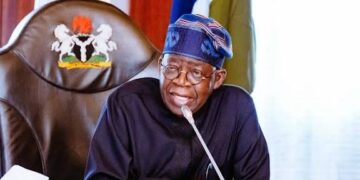
The party alleged that the extension was part of a broader plan by the administration of President Bola Ahmed Tinubu to deploy capital budget provisions to fund the All Progressives Congress (APC) campaign ahead of the 2027 general elections.
The APM made the allegation in a statement issued by its National Publicity Secretary, Abubakar Yusuf, who described the development as a serious threat to effective governance, economic planning and national development.
Yusuf questioned the fate of the 2026 budget, particularly with the last quarter of the year already running out, asking how meaningful implementation could be achieved under the prevailing circumstances.
The party said it was unacceptable for Nigeria to continue operating a distorted budget cycle, accusing the Tinubu administration of undermining years of progress made in improving budget planning and implementation.
According to the APM spokesman, the situation had created uncertainty for ordinary Nigerians and weakened the capacity of government to provide essential infrastructure and social services.
“It is completely unacceptable that the achievements made towards improving budget performance over the years have been truncated by the maladministration of the current Tinubu leadership,” Yusuf said.
He also accused the Federal Government and the National Assembly of mortgaging the future of Nigerians through what he described as erratic and inconsistent budget implementation.
The APM spokesman recalled that Nigeria operated a January-to-December budget cycle for eight consecutive years, arguing that the arrangement was subsequently disrupted by successive administrations but had now been worsened under the Tinubu government.
He said while previous administrations had allowed budget implementation to run into the following year, the current administration had allegedly taken the practice to an unprecedented level.
“We experienced this in 2024, 2025 and now 2026 budgets, which may run through till December 2027, putting the lives of ordinary Nigerians in jeopardy and uncertainty,” he said.
Yusuf questioned the implications of the development for economic, social and infrastructural development, warning that prolonged and overlapping budget cycles could undermine effective planning and accountability.
“What will be the fate of Nigerians with regards to economic, social and infrastructural development in the last four years and subsequent years with the obvious abnormality with regards to budget cycle and performance?” he queried.
He further alleged that the prolonged budget implementation cycle could create opportunities for corruption and abuse of public resources.
“Since the budget is expected to guide and regulate the annual expenditure of a nation, both in capital and recurrent expenditure, it is glaring that the current situation will stabilise sharp practices, corruption and naked stealing at the top level of government under the APC administration,” he said.
The APM urged Nigerians not to lose hope, saying the party would reverse what it described as years of economic mismanagement if given the mandate in 2027.
The party said an APM government led by its presidential candidate, Engr. Seyi Makinde, would replicate what it described as the development model of Oyo State at the national level.
“The resolve to vote Engr. Seyi Makinde in the January 2027 general elections will no doubt put an end to years of suffering by many Nigerians and the cycle of corruption by the privileged few within the shortest possible time,” Yusuf said.
He assured Nigerians that an APM administration under Makinde would prioritise economic growth, social development and infrastructure, while restoring discipline and predictability to Nigeria’s budgetary process.
“With APM at the helm of Nigeria’s government under Engr. Seyi Makinde’s presidency, economic, social and infrastructural development will be prioritised seamlessly,” he added.