

















By Magnus Onyibe
Last week, I argued that the centralisation of policing in 1966 and the introduction of fuel subsidies in 1973 were both temporary measures introduced during Gen. Yakubu Gowon’s administration that became permanent because they had no end dates. This week, I promised to address the bigger question readers have been asking: if the macroeconomy is now working, why is the microeconomy still hurting?
The answer lies in what economists call transmission lag. As I explained last week, it takes between 24 and 36 months to build a factory. Readers were also reminded that Aliko Dangote spent seven years building his 650,000-barrels-per-day refinery from start to finish.
Therefore, the $50 billion in Memoranda of Understanding (MoUs), the $2.06 billion in Foreign Direct Investment (FDI), and the JPMorgan bond listing, which could bring $17.5 billion into the Nigerian economy, as I argued in this column last week, are real prospects.
But these developments are concentrated at the top, at the macroeconomic level. They will not translate into money in the market woman’s purse or food in our families’ cooking pots until someone in the middle converts macroeconomic gains into microeconomic opportunities and jobs.
How do we shorten that 36-month transmission lag to 12 months? There are three bridges to cross.
Before delving deeper into how the bridges can link macro to micro I would like us to adopt Gen. Gowon’s development template from some 53 years ago, when he intervened as Head of State to protect Nigerians from the kind of oil price shock the world is currently grappling with, arising from the ongoing Iran-US-Israeli war and manifesting as a global energy crisis.
As readers may recall, Gen. Gowon’s administration introduced a petrol price subsidy in 1973 to cushion the impact of the oil price shock on Nigerians following the Yom Kippur War between Egypt and Israel.
The difference I identified between Gowon’s 1973 policy and the current actions of European leaders seeking to ameliorate the effects of the oil price shock arising from the Iran-Israel-US conflict is that their interventions, through tax relief on oil, have end dates. Gowon’s intervention, however, had no specified termination date. This is why the fuel subsidy remained in operation until the incumbent president, Bola Tinubu, announced its removal in his inaugural speech on May 29, 2023, some 50 years later.
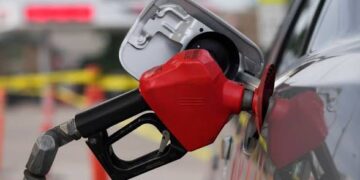
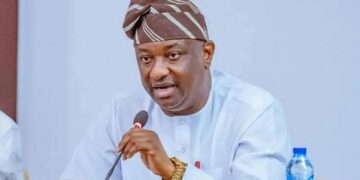
Incidentally, the current government intervention, announced last Thursday by the Minister of Finance and Coordinating Minister of the Economy, Taiwo Oyedele, in the form of a 30-day discount on petrol prices, has an end date.
This suggests to me that the government is reading and listening to those of us in the commentariat who are essentially leading from the streets. Hence, it has decided not to repeat the mistake of the Gowon era, when temporary interventions were introduced without time limits, as I pointed out in this column last week.
By offering a 30-day discount on petrol prices, presumably renewable if the prevailing circumstances persist, the government has demonstrated that it has learnt the lesson of ensuring that temporary policies have clearly defined end dates from the outset. This is necessary to prevent temporary interventions from becoming permanent, as happened with the centralisation of policing in 1966 and petroleum product subsidies in 1973.
For the record, and to emphasise the point, the other open-ended policy that became permanent because it had no time frame was the centralisation of policing in Nigeria in 1966, following the military coup that toppled the First Republic’s democratic administration. The Tinubu administration is also in the process of reversing that arrangement through the ongoing decentralisation of policing, which has already undergone crucial legislative procedures.
Gen. Gowon’s second approach to alleviating the hardship Nigerians faced under circumstances similar to those prevailing today was the introduction of a salary award known as the Udoji Award, named after the chairman of the commission that recommended the reforms. The aim was to provide relief to long-suffering Nigerian workers.
In fact, the policy worked very well, except that its implementation was cut short following the ouster of Gowon’s administration in a military coup d’état in 1975.
Unfortunately, the Tinubu administration has not yet adopted a Udoji-style salary award as a means of reducing the hardship arising from the removal of the petrol subsidy.
Instead, a rather nebulous and complex, high-cost-of-living intervention, described through terms such as discount and modulation, among other labels designed to distinguish it from subsidy, has been adopted. The initiative has attracted considerable public backlash and even parody, largely because it is too complicated to understand, while the estimated relief of N66 per litre is too insignificant for the masses to appreciate the intended benefit.
It is encouraging that Gen. Gowon recently visited President Tinubu at the Aso Rock Presidential Villa. I would like to hazard a guess that he may have shared his experience of managing the turbulence associated with oil booms and busts with the President.
In the latter part of this intervention, I will examine this concern more deeply to determine why a salary award, which has not yet been considered, might have been more efficacious than the price discount, modulation and forward sale of crude oil to local refiners currently on offer. These measures have triggered considerable public debate across conventional and social media platforms.
For now, it is appropriate to focus on the three bridges between progress at the macroeconomic and microeconomic levels that I proposed in the opening paragraphs of this intervention.
The First Bridge: The Fiscal Bridge — From the Federation Account Allocation Committee (FAAC) to the Pocket and Cooking Pot
In my article last week, I referenced the Udoji Award of 1974 as an example of a policy introduced under Gowon’s administration that worked because the money went directly into workers’ pockets.
Today, monthly allocations from the Federation Account Allocation Committee (FAAC) to states have increased substantially, reportedly rising from N1.1 trillion to more than N2.2 trillion following the removal of the petrol subsidy. Yet, the ordinary Nigerian in Warri, Kaura Namoda, Ohafia or Igokoda does not feel the impact.
The solution, in my view, is to borrow from Gowon’s approach but modernise it.
Of the roughly N10 trillion saved from subsidy removal since May 2023, 50 per cent should be ring-fenced, not for palliatives such as rice distributions that quickly disappear, but for conditional vouchers. These could include vouchers for farm inputs, compressed natural gas (CNG) conversion kits for commercial tricycles, or keke (rather than focusing only on mass-transit buses, cars and other commercial vehicles), as well as school-fee credits paid directly to schools.
That way, the poor could begin to feel the much-vaunted dividends of the bold reforms undertaken by the Tinubu administration within 30 days, rather than having to wait 30 months.
Another unconventional but potentially impactful measure would be to publish FAAC spending on a local government area-by-local government area basis online, just as the Budget Office already publishes information at the federal level.
That way, our youths, who have been devoting too much of their valuable skills and talents to distorting information to suit their political biases, would have sufficient data and content to engage in more useful and productive work. Such efforts could help steer the ship of progress in our beloved nation in the right direction.
Let None of the Critics Claim That Government Does Not Listen and Act on Advice.
Let none of the critics come up with the excuse that the government does not listen to advice or act on it.
That may have been true of past administrations, but the incumbent administration is not shy about reversing its policies when it realises that they are unpopular with the masses or lack pragmatism.
The increase in cash transfers to indigent members of society is a case in point. The threshold for beneficiaries had initially been set at a lower level, but President Tinubu subsequently increased the amount payable.
Another example can be cited from as recently as last week.
In this column last Tuesday, I identified the absence of commencement and end dates as the bogey of policies intended to be temporary but which eventually became permanent. Examples include the centralisation of policing since 1966 and the introduction of petrol subsidies in 1973.
I then wondered whether the administration would offer some reprieve from the burden of rising petrol prices by restoring some form of subsidy, as European and Asian countries are doing, or sustain its commitment not to reverse the removal of petrol subsidies and instead find alternative ways to ameliorate the unfolding cost-of-living crisis.
By Thursday, the government had announced a 30-day discount on petrol prices. Although the initiative is complex, the relief appears limited, and the measure may not produce the intended impact, its commencement and end dates are as clear as crystal.
Before I identified the shortcomings associated with the open-ended nature of policies intended to be temporary but which eventually became perpetual, commentators debating whether petrol subsidies were sustainable—including presidential candidates now clamouring for their restoration—had largely focused on the abruptness of the removal. They blamed Tinubu for failing to consult stakeholders beforehand, while promising to do better if elected.
None of them, however, indicated that any subsidy policy they might introduce would have a defined tenure, as Minister of Finance and Coordinating Minister of the Economy Taiwo Oyedele has now done with the current intervention.
The Second Bridge: The Production Bridge — Securing the Economy.
The second bridge is what I call the Production Bridge, anchored on economic security.
As we can all agree, poverty in Nigeria is largely farming-related poverty. And poverty cannot be reduced when farmers are unable to go to their farms because of insecurity.
Centralised policing—the emergency measure introduced in 1967—has outlived its usefulness, as I argued last week. A police-to-population ratio of approximately one officer to 600 Nigerians cannot adequately secure farming settlements in Benue, Plateau, Borno and even Kwara, Ondo and Ekiti states.
Hence, we must decentralise policing to protect production.
That is why state police, forest guards and community policing should not be viewed merely as political issues but as economic policy instruments. It is also why I am a strong advocate of decentralised policing, as evidenced by my latest book, The Imperative of State Police in Nigeria, in which I make a compelling case for restoring a decentralised policing system.
When farmers can safely return to their farms, food inflation—which accounts for a substantial share of the hardship experienced by Nigerian households—can begin to ease.
By the same logic, the Operation Feed the Nation (OFN) programme introduced under the military administration of Gen. Olusegun Obasanjo in 1976 succeeded because farmers felt sufficiently secure to engage in agricultural production.
Similarly, the Lagos-Calabar Coastal Highway and the Sokoto-Badagry Highway, which I identified last week as examples of investments capable of transferring economic progress from the macroeconomic to the microeconomic level, will reduce transportation costs only if goods can move freely without bandit checkpoints and kidnappings for ransom.
Such criminal activities have become rampant, although the situation is gradually improving in some areas. Nevertheless, adults and children remain in captivity, even as our security agencies race against time to rescue them.
Put succinctly, investments in road construction, port rehabilitation and the security of lives and property will collectively generate substantial employment at the microeconomic level and promote prosperity for Nigerians.
The Third Bridge: The Price Bridge — Replacing Subsidy, Not Merely Removing It
The third bridge is the Price Bridge, which concerns replacing the subsidy mechanism rather than simply removing it.
Gowon’s 1973 subsidy was a price bridge designed to cushion Nigerians against the effects of a global oil shock. Europe is adopting similar measures today, with countries such as France, Germany and the United Kingdom cutting fuel taxes for specified periods. This reflects precisely the lesson I highlighted in my column last week: temporary measures must have clearly defined expiry dates.
That is the principle Minister of Finance Taiwo Oyedele has adopted in the current intervention.
However, it would appear that Nigeria removed the existing bridge on May 29, 2023, when it ended the decades-old petrol subsidy regime without first establishing an adequate replacement.
Clearly, we need a new price bridge with an expiry date. Oyedele’s decision to introduce a temporary 30-day intervention involving petrol price discounts and modulation is an attempt to provide such a bridge.
However, the problem with this measure, in my view, is that it is too sophisticated to be effective as a public policy intervention.
If Oyedele were recommending such a complex mechanism for a private-sector entity, such as one of the clients he might advise in his professional capacity at KPMG, that would be perfectly understandable. But the public sector operates under different circumstances. Such a complicated arrangement could require consultants to explain how it should be implemented and how its benefits would reach ordinary Nigerians.
Given that the discount and modulation measure has a lifespan of just 30 days, the concept does not appear viable to me.
Instead of the feeble and complicated intervention announced by Oyedele, consider what free CNG conversion for commercial vehicles—including two million tricycles, motorcycles and buses—over 24 months, with an end date in 2028, could achieve.
Rather than restricting the new intervention to commercial vehicles in a manner that could potentially recreate the notorious petrol queues of the past, why not concentrate support on productive economic activities?
Nigeria has barely 900 NNPC filling stations nationwide, according to the figure cited in this argument. Recreating an arrangement that could generate long queues and ugly scenes of disorder at filling stations would be a backward step. Nigerians would prefer to consign those experiences to the dustbin of history.
An alternative approach would be to make CNG available to fishing boats, farm trucks and manufacturing enterprises, rather than extending price support to private SUVs and similar vehicles.
Furthermore, why not use the reduction in interest rates—which I noted in my intervention last week had brought the rate to 23 per cent—to finance manufacturing rather than concentrating predominantly on services?
As I pointed out last week, manufacturing currently accounts for only about 8 per cent of Nigeria’s GDP, an abysmally low proportion that contributes to high unemployment.
If banks, which reportedly recorded N6.7 trillion in profits, were encouraged to lend to factories at single-digit interest rates, jobs would be created and wealth generated at the macroeconomic level would trickle down to the microeconomic level more quickly.
In the past, the Central Bank of Nigeria (CBN) incentivised banks that financed manufacturing, agriculture and other priority sectors of economic development. Without appropriate incentives, how can funds be redirected towards the sectors the government seeks to prioritise?
In Conclusion: Laying the Slab Between Macroeconomic Growth and Microeconomic Prosperity.
In conclusion, allow me to reiterate the argument I made in my last article: the missing slab is what Nigeria must put in place to bridge the gap between macroeconomic growth and microeconomic prosperity.
The objective is to ensure that, as we say in local parlance, what is served at the high table also reaches those seated on the floor—in other words, ordinary Nigerians at the grassroots.
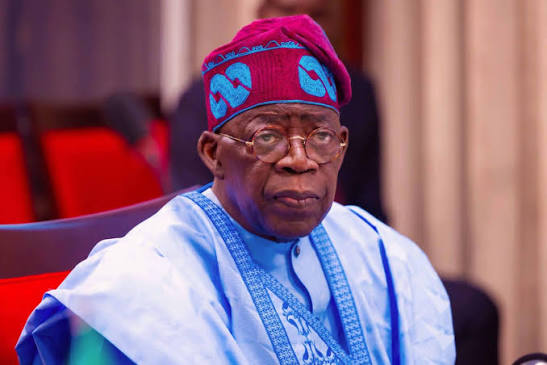
There is both local and international consensus that President Tinubu has built the superstructure. Nigeria’s foreign reserves have increased by $21 billion, the foreign exchange market has stabilised, oil production has risen from 1.47 million barrels per day to 1.74 million barrels per day, and banks have recorded N6.7 trillion in profits. Port reforms are also on the horizon, with BlackRock’s reported interest in helping position Nigeria as a maritime hub for the region. The challenge now is how to slab the superstructure so that more Nigerian can walk across from micro where the rain is falling to the macro where the sun is shinning. In other words , Nigeria is over due for a cascade of the gains of reforms to the masses.
My point is that my generation witnessed Gen. Gowon build an economic superstructure during the oil boom but unable to lay the slab needed to translate that wealth into lasting prosperity because his administration was forced out of office in a coup d’état in 1975.
While the Udoji salary award, though beneficial to workers in the short term, was not accompanied by the structural foundations needed to create enduring wealth because the administration exited abruptly. The resulting spending pressures also contributed to inflation.
This time around, the slab—which I use to illustrate the stage Nigeria and its economy have reached—must be laid deliberately, with clearly defined commencement and end dates for temporary interventions and with the masses able to see and feel the results of the difficult reforms.
However, the process of building the bridge and laying the slab beneath the economic superstructure could have been faster if the administration had opted for a salary increase for workers, as the Nigeria Labour Congress (NLC) and many Nigerians struggling with the high cost of living have demanded.
Although the NLC is seeking a minimum wage of N500,000, an offer of N150,000—more than double the current N70,000 minimum wage—could have produced a more dramatic and desirable effect than the complicated system of discounted and modulated petrol pricing currently being offered.
Critics have, more or less, portrayed the arrangement as a subsidy dressed up with lipstick and a wig to make it appear more attractive.
Osun State, under Governor Ademola Adeleke and the Accord Party, adopted the salary-increase approach and achieved resounding success.
Under Tinubu’s administration, salary and pension arrears owed to public servants have reportedly been cleared, while the salaries of military personnel have also been paid up to date. There are good reasons to build on that foundation.
In any case, under the agreement with organised labour, an upward salary review is due, and a strike notice has reportedly been served on the government.
Why not channel the administration’s energy towards that option instead of experimenting with petrol pricing?
Indeed, I would argue that Minister Oyedele may inadvertently have handed the opposition ammunition with which to attack the incumbent administration’s position that there will be no return to petrol subsidies. His intervention has enabled critics to parody and cast aspersions on the withdrawal of subsidies, a policy I strongly support because of its long-term benefits.
The ridicule is understandable when viewed against the tongue-lashing President Tinubu gave Atiku Abubakar, the Waziri of Adamawa and presidential candidate of the African Democratic Congress (ADC), at the beginning of the campaign season. When Atiku proposed restoring petrol subsidies if elected president in 2027, Tinubu reportedly characterised the proposal as ignorant.
In my considered opinion, rather than taking the bait of restoring subsidies in any guise, a wage increase would have been a more original policy choice—one that could have been attributed to and owned by President Tinubu and the All Progressives Congress (APC).
Unfortunately, the current discount and price-modulation measure is now being associated by critics with the ADC and its presidential candidate.
Be that as it may, if the administration focuses on supporting okada and keke operators by boosting the production of electric and, where feasible, CNG-powered versions of these vehicles, it would create employment opportunities for a large number of Nigerians whose livelihoods depend on these services.
It would also improve mobility for millions of Nigerians, given that keke and okada serve as important mass-transit options. In this respect, they perform a function comparable to that of trains in advanced societies with well-developed mass-transit systems, where the public enjoys affordable and accessible transportation.
When—and if—that happens, the Age of Prosperity proclaimed by President Tinubu in his October 1 Independence Day address will move beyond the Bloomberg terminal, where rising GDP figures and other macroeconomic gains are evident.
The current economic success story, which is increasingly becoming a familiar refrain, must become the palm oil with which Nigerian masses can eat their yam, to paraphrase the great essayist Chinua Achebe.
Only then can Nigerians, whose spirits have been dampened by the prevailing economic hardship, begin singing along to Fido’s hit song, Joy Is Coming.
But first, we must all be resolute in building the bridge faster.
Next week, I will further explain some unconventional and pragmatic ways to accelerate the convergence of macroeconomic and microeconomic development.
Magnus Onyibe,is an entrepreneur, public policy analyst, author, democracy advocate, development strategist, an alumnus of the Fletcher School of Law and Diplomacy, Tufts University, Massachusetts, USA, a Commonwealth Institute scholar, and a former commissioner in the Delta State government. He sent this piece from Lagos.