








By Kio Amachree | President, Worldview International
Stockholm, Sweden | 3 November 2026
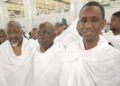
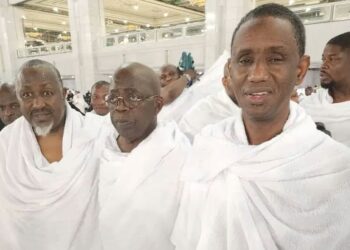
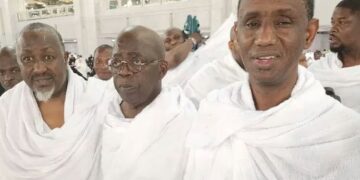
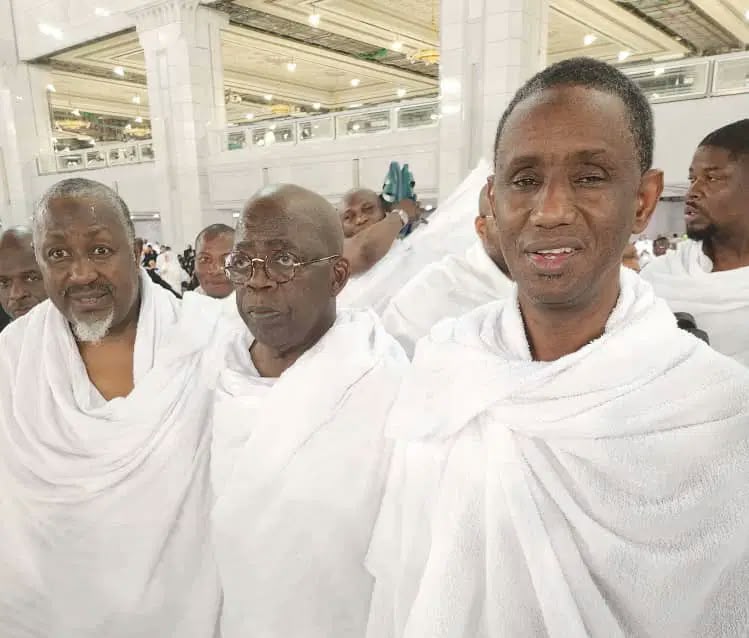
*There is something profoundly unconvincing about President Bola Ahmed Tinubu’s latest religious spectacle* in Saudi Arabia. The carefully publicised photographs of him at the Holy Kaaba, kissing the Black Stone and offering prayers for Nigeria, *raise an uncomfortable question: when does an expression of personal faith become an exercise in political image-making?*
The distinction matters, particularly in a country where religion has become so closely intertwined with political power.
Tinubu is entitled to practise his religion without interference. *But Nigerians are equally entitled to question why a presidential pilgrimage requires such elaborate publicity, especially when the president’s own aide has linked the visit to his re-election ambitions in 2027.*
*A pilgrimage is not a certificate of good character. Nor does access to Islam’s holiest sanctuary confer political legitimacy.*
The president has spent much of his political career surrounded by controversies concerning his personal history, educational credentials, financial dealings and political associations. Some allegations remain disputed, others have been litigated, and many questions continue to generate public debate.
*Among the darker chapters of Lagos political history is the murder of Engineer Funsho Williams in July 2006.* Tinubu was subsequently named in litigation seeking to reopen aspects of the investigation. That litigation did not establish his involvement in the killing, but the failure to secure a definitive resolution to the murder remains a troubling indictment of Nigeria’s criminal justice system.
There are also legitimate questions about the award of enormous government contracts, political patronage and the relationship between public authority and private commercial interests.
*None of these matters disappears because a president has travelled to Mecca.*
*What makes the Saudi Arabian publicity particularly objectionable is the impression that religious imagery can somehow compensate for deficiencies in public accountability*.
*Islam places enormous emphasis on justice, honesty, humility and the responsible exercise of authority. These are obligations that extend far beyond the performance of religious rituals.*
A president who invokes divine authority must surely expect his conduct in public office to be measured against those principles.
Nigeria is experiencing profound economic and social difficulties. Millions of citizens are struggling with the cost of living, insecurity, unemployment and declining purchasing power. For these Nigerians, photographs of their president praying in Saudi Arabia offer little reassurance about the direction of their country.
*The real test of leadership is not how convincingly a president demonstrates his religious devotion before television cameras*.
It is whether his government protects its citizens, respects the law, manages public resources responsibly and submits itself to meaningful scrutiny.
I find the increasing use of religion as political theatre deeply offensive, not because I oppose religious observance, but because I respect the distinction between genuine faith and political expediency.
The same criticism would apply to a Christian president who transformed a visit to the Vatican or Jerusalem into a campaign advertisement.
*Religion should never become a convenient refuge from difficult questions about political conduct.*
Tinubu has said that political power belongs to Allah, who gives it and takes it away. That is his belief, and he is entitled to express it. But in a constitutional democracy, political power also carries obligations to the citizens in whose name it is exercised.
Those obligations cannot be discharged through prayer alone.
*The president would do more to demonstrate his commitment to the moral principles of his faith by ensuring transparent government, independent institutions, credible investigations into wrongdoing and equal treatment before the law.*
*Nigeria does not suffer from a shortage of public prayers. It suffers from a persistent failure to translate professed moral convictions into the conduct of public affairs.*
There is nothing wrong with a president going to Mecca. *There is something deeply questionable about allowing the symbolism of that journey to overshadow the responsibilities of his office.*
*The Nigerian people do not need another demonstration of presidential piety. They need evidence of presidential accountability.*
And no photograph taken in Mecca can provide that.
Kio Amachree
President, Worldview International
Letters from Stockholm