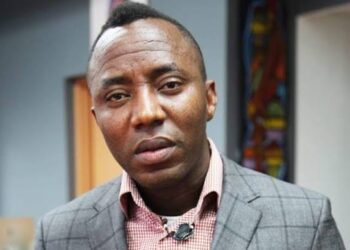
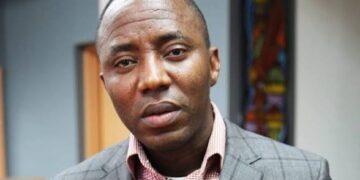
















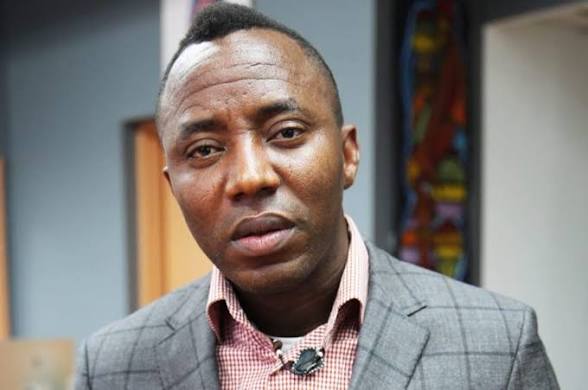

The Human Rights Writers Association of Nigeria (HURIWA) is deeply alarmed by the disturbing trajectory of the criminal proceedings against activist and current presidential candidate of African Action Congress(AAC) , Omoyele Sowore.

We caution the Federal High Court against creating the unmistakable impression that extraordinary judicial speed is reserved only for critics of those in power, while politically exposed persons accused of monumental corruption continue to enjoy endless delays that span decades.
Justice must never only be done; it must be seen to be done. Where a defendant has openly expressed a lack of confidence in the impartiality of the presiding judge and has raised what he considers credible grounds suggesting compromise, judicial ethics demand that such concerns be handled with utmost sensitivity.
The honourable judge should seriously consider recusing himself in order to preserve public confidence in the integrity and impartiality of the judiciary.
We ask a simple question: Is Justice Mohammed Umar the only judge of the Federal High Court in Abuja? If not, why should the judiciary risk the credibility of these proceedings when another judge can hear the matter without the baggage of perceived bias?
HURIWA is particularly disturbed by what appears to be an unusual haste to conclude the prosecution of Omoyele Sowore, with repeated threats to foreclose his defence. Such judicial urgency contrasts sharply with the painfully slow pace at which high-profile corruption cases involving politically influential figures have crawled through the same Federal High Court.
Nigerians have not forgotten that several anti-corruption prosecutions involving former governors have remained in court for well over a decade. Cases involving former Abia State Governor, Orji Uzor Kalu, former Benue State Governor, Gabriel Suswam, and former Taraba State Governor, Darius Ishaku, have each experienced prolonged legal proceedings marked by repeated adjournments and procedural delays for over a decade each. Yet, no comparable judicial urgency was deployed to accelerate those matters to conclusion.
This glaring disparity raises troubling constitutional questions. Why is there extraordinary speed when the accused is a government critic, but extraordinary delay when the defendants are politically connected individuals facing allegations of looting public funds? Justice cannot operate with two different speed limits.
The Nigerian Constitution guarantees every citizen the right to a fair hearing. That right includes adequate opportunity to prepare and present a defence with counsel of one’s choice. Threatening to shut out the defence in a criminal trial, particularly where liberty is at stake, should never become a routine judicial response.
HURIWA recalls the painful experience of the prolonged detention and controversial prosecution of Nnamdi Kanu, a case that generated widespread national and international criticism over due process concerns. Nigeria must not repeat mistakes that erode confidence in the rule of law and project the judiciary as an instrument for silencing dissent.
The judiciary remains the last hope of the common man. It must therefore avoid every appearance of selective justice, political influence, or institutional intolerance toward citizens who hold dissenting opinions.
Although Justice John Tsoho the chief judge of the Federal High Court is perceived as being extremely pro-All Progressives Congress and pro-Executive arm of government given several assignments of cases against the interest of the President instituted by minister of FCT to a few coterie of judges that have issued controversial judgments that destabilised the main opposition People Democratic Party to the pleasure of the ruling party, we will still call upon the Chief Judge of the Federal High Court to closely monitor this case in the overriding interest of justice and public confidence.
We equally urge the court to ensure that Omoyele Sowore enjoys every constitutional safeguard guaranteed under Nigerian law, including the full opportunity to present his defence without intimidation or undue procedural pressure.
Democracy flourishes where criticism is tolerated, not criminalised. Courts exist to protect constitutional freedoms, not to create the perception that dissenters are being hurried into conviction while powerful individuals accused of massive economic crimes continue to exploit endless delays. This is why we fundamentally opposed the needless prosecution of Omoyele Sowore by the Department of State Services just because he made an unpleasant comment on social media against the person of President Tinubu. We are worried that the presiding judge he refused to recuse himself despite a loss of trust and confidence in his impartiality by the defendant, should not continue the matter as if he has a deadline from the president through the DSS to jail Sowere to please the president of Nigeria at the moment.
Nigeria’s judiciary must stand above suspicion. It must demonstrate through its conduct that every Nigerian—whether an opposition figure, activist, former governor, or ordinary citizen—is entitled to equal justice under the law.
Signed:
Comrade Emmanuel Nnadozie Onwubiko
National Coordinator
Human Rights Writers Association of Nigeria (HURIWA).
- Friday July 17th 2026.
The Human Rights Writers Association of Nigeria (HURIWA) is deeply alarmed by the disturbing trajectory of the criminal proceedings against activist and current presidential candidate of African Action Congress(AAC) , Omoyele Sowore.
We caution the Federal High Court against creating the unmistakable impression that extraordinary judicial speed is reserved only for critics of those in power, while politically exposed persons accused of monumental corruption continue to enjoy endless delays that span decades.
Justice must never only be done; it must be seen to be done. Where a defendant has openly expressed a lack of confidence in the impartiality of the presiding judge and has raised what he considers credible grounds suggesting compromise, judicial ethics demand that such concerns be handled with utmost sensitivity.
The honourable judge should seriously consider recusing himself in order to preserve public confidence in the integrity and impartiality of the judiciary.
We ask a simple question: Is Justice Mohammed Umar the only judge of the Federal High Court in Abuja? If not, why should the judiciary risk the credibility of these proceedings when another judge can hear the matter without the baggage of perceived bias?
HURIWA is particularly disturbed by what appears to be an unusual haste to conclude the prosecution of Omoyele Sowore, with repeated threats to foreclose his defence. Such judicial urgency contrasts sharply with the painfully slow pace at which high-profile corruption cases involving politically influential figures have crawled through the same Federal High Court.
Nigerians have not forgotten that several anti-corruption prosecutions involving former governors have remained in court for well over a decade. Cases involving former Abia State Governor, Orji Uzor Kalu, former Benue State Governor, Gabriel Suswam, and former Taraba State Governor, Darius Ishaku, have each experienced prolonged legal proceedings marked by repeated adjournments and procedural delays for over a decade each. Yet, no comparable judicial urgency was deployed to accelerate those matters to conclusion.
This glaring disparity raises troubling constitutional questions. Why is there extraordinary speed when the accused is a government critic, but extraordinary delay when the defendants are politically connected individuals facing allegations of looting public funds? Justice cannot operate with two different speed limits.
The Nigerian Constitution guarantees every citizen the right to a fair hearing. That right includes adequate opportunity to prepare and present a defence with counsel of one’s choice. Threatening to shut out the defence in a criminal trial, particularly where liberty is at stake, should never become a routine judicial response.
HURIWA recalls the painful experience of the prolonged detention and controversial prosecution of Nnamdi Kanu, a case that generated widespread national and international criticism over due process concerns. Nigeria must not repeat mistakes that erode confidence in the rule of law and project the judiciary as an instrument for silencing dissent.
The judiciary remains the last hope of the common man. It must therefore avoid every appearance of selective justice, political influence, or institutional intolerance toward citizens who hold dissenting opinions.
Although Justice John Tsoho the chief judge of the Federal High Court is perceived as being extremely pro-All Progressives Congress and pro-Executive arm of government given several assignments of cases against the interest of the President instituted by minister of FCT to a few coterie of judges that have issued controversial judgments that destabilised the main opposition People Democratic Party to the pleasure of the ruling party, we will still call upon the Chief Judge of the Federal High Court to closely monitor this case in the overriding interest of justice and public confidence.
We equally urge the court to ensure that Omoyele Sowore enjoys every constitutional safeguard guaranteed under Nigerian law, including the full opportunity to present his defence without intimidation or undue procedural pressure.
Democracy flourishes where criticism is tolerated, not criminalised. Courts exist to protect constitutional freedoms, not to create the perception that dissenters are being hurried into conviction while powerful individuals accused of massive economic crimes continue to exploit endless delays. This is why we fundamentally opposed the needless prosecution of Omoyele Sowore by the Department of State Services just because he made an unpleasant comment on social media against the person of President Tinubu. We are worried that the presiding judge he refused to recuse himself despite a loss of trust and confidence in his impartiality by the defendant, should not continue the matter as if he has a deadline from the president through the DSS to jail Sowere to please the president of Nigeria at the moment.
Nigeria’s judiciary must stand above suspicion. It must demonstrate through its conduct that every Nigerian—whether an opposition figure, activist, former governor, or ordinary citizen—is entitled to equal justice under the law.
Signed:
Comrade Emmanuel Nnadozie Onwubiko
National Coordinator
Human Rights Writers Association of Nigeria (HURIWA).
Friday July 17th 2026.