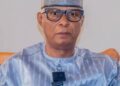


























Frontline Rotarian and stalwart of the All Progressives Congress (APC) in Ika South Local Government Area of Delta State, Rotarian Monye Ehiwuogwu Lucky, has called for the government to subsidise the treatment of malaria.

He said that this could be done by funding the local manufacture of anti-malaria drugs by indigenous pharmaceutical firms.
Monye, the Managing Director and Chief Executive Officer (CEO) of Monaco Ventures Nigeria Limited, a first line private security organization in the country, described malaria as a major health issue in Nigeria.
He said, in a statement to mark this year’s edition of World Malaria Day, that malaria afflicts much of the Nigerian population every year and costs them tens of billions of naira to treat.
According to him, the cost of such a high level of infection among Nigerians was not only the huge financial outlay involved in its treatment, but its productivity and psychological effects as well.
Monye added that malaria, aside from its huge negative effect on productivity, also causes a reasonable level of mortality among Nigerians, especially children.
The APC chieftain said the effective subsidy of the manufacture of anti-malaria drugs in the country would reduce the access burden for ordinary citizens, some of whom had lost much to the ailment due to inaccessibility
Monye also said that the subsidy policy should be augmented with an effective nationwide enlightenment campaign of Nigerians on the prevention and treatment of the ailment.
He stressed, for instance, that many Nigerians do not know that a regular clean environmental sanitation culture and de-silting of blocked drains could help significantly cut back the incidence of malaria infection and its effects.
Monye said the campaign should be mounted by the government via both its ministries of health and information, in local languages and dialects, for maximum effect.
He also stressed the need for the enhanced delivery of Insecticide Treated Nets, which, he said, had proven potent in the prevention of attacks and infection.
Besides, he said the government could find research into locally relevant medical modules, including immunisation injection, to supplement existing treatment regimes.