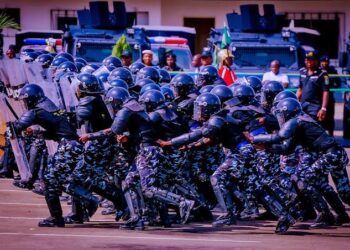
























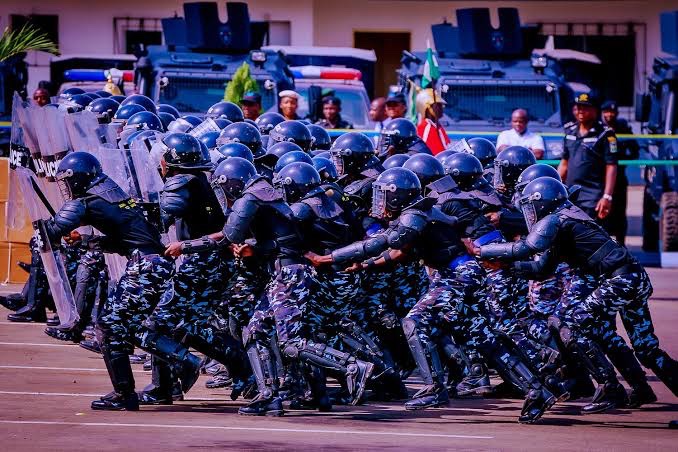

The applause and warm welcome greeting the proposed state police is a defining moment. It calls for deeper evaluation of why we need it.

Historically, Nigerian policing has roots in two traditions: precolonial informal community policing and colonial formal policing. The military-era push to harmonize everything into one centralized, federal structure is another key concept in this evaluation.
At different stages of our national life, policies are altered to suit contemporary needs. That’s understandable. But those alterations must be weighed against our societal realities, not just immediate needs.
Look at privatization. It was clapped for and widely welcomed. Yet one wonders: were our societal factors beyond “need” actually considered? And have we met the unmet needs that supposedly warranted privatization?
Today many have jumped to conclude that state police is the solution to our security challenges. The reasons given rarely explain why the current federal police, even with full military support, has failed to solve those challenges. “History and diversity” are often the only justifications offered.
Proponents of state police argue that local knowledge and proximity will make policing faster and more effective. They say a officer from Kano understands Kano’s terrain, language, and conflict dynamics better than an officer of Bayelsa origin posted to Kano. That point has merit. Response time and community trust are real advantages of decentralization.
However,proximity without reform just means abuse happens closer to home. If we deploy officers who are poorly trained, poorly paid, and politically beholden, then “local knowledge” becomes “local intimidation”. The same federal police failures we see today with public perception of: extortion, partisanship, disregard for rights, will simply be replicated in 36 commands, with governors holding the leash.
So the question is not whether local knowledge matters. It does. The question is: can state police deliver local knowledge and professionalism? Without fixing qualifications, remuneration, and welfare first, we are not decentralizing policing. We are decentralizing dysfunction.
But we’re missing the real question: what defines “a policeman” in Nigeria? Qualifications, remuneration, and welfare should define a Nigerian police officer. Do we currently have qualified, willing, and well-remunerated officers?
If state police is created, will it be different on those same parameters? The answer to that will show whether state police points us in the right direction, or if we’re just dancing to the gallery.
We’ve always been too quick to clap for flawed ideas. Why not use structured, incremental approaches to our problems? I find it hard to believe that professionals and thinkers stay silent when their superior knowledge is most needed.
An incremental approach should have been applied to privatization, so we could evaluate outcomes before full rollout. Instead, a few capitalists pushed it onto a largely uninformed public.
Fuel subsidy removal is another example. It could have been phased out incrementally. Instead, every 2023 presidential candidate agreed on abrupt removal, and the public was convinced. What has been the outcome?
Now it’s state police. Whatever is wrong with the federal police will also be wrong with state police unless we fix the fundamentals.
So why not start by recruiting highly qualified, willing people into the police, and remunerate them based on qualification and job risk? Why not implement “serve in your state of origin” and other innovative community policing techniques?
With our current political culture, a state police will just be labeled “political” by those clapping today. And if human rights abuses and use of police as a tool of oppression are already concerns under federal policing, how much worse could it be with state-level control?
For once, Nigerians, let us think deeper.
CHINYE Nnabundo Ike Martins
Tel.:08064041611