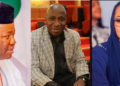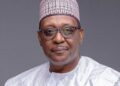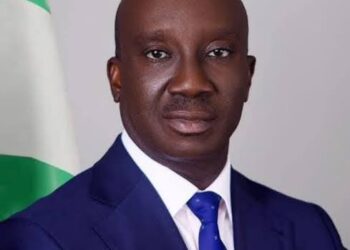
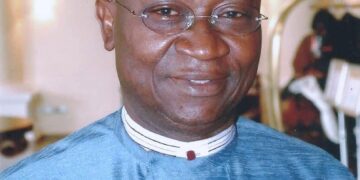

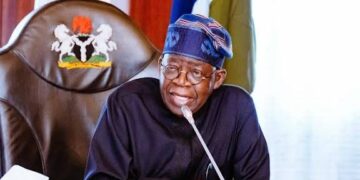













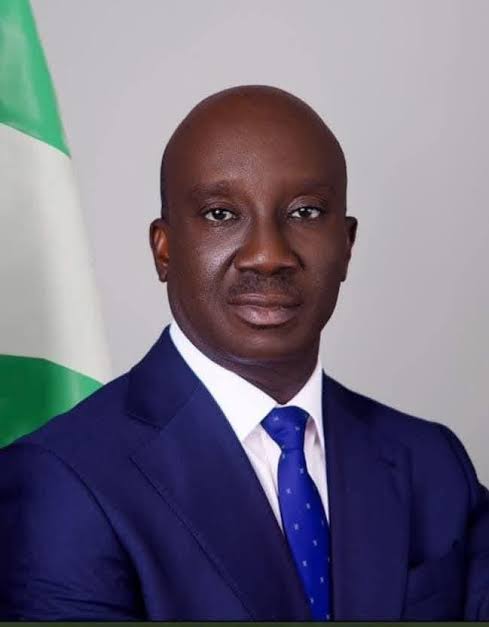

The Human Rights Writers Association of Nigeria (HURIWA) has wholeheartedly applauded the Governor of Edo State, Senator Monday Okpebholo, for nominating Mr. Martin Anayochukwu Oli, an indigene of Enugu State and a prominent businessman resident in Edo State, as Commissioner-designate, describing the decision as a remarkable act of statesmanship and one of the most profound demonstrations of inclusive governance witnessed in recent times.

HURIWA believes that Governor Okpebholo has, through this singular action, sent a powerful message to the nation that leadership should be driven by merit, competence, commitment, character and contribution to society rather than by narrow ethnic calculations or discriminatory notions of ancestry and place of origin.
At a time when many Nigerians continue to face barriers and institutional discrimination in states where they have lived for decades, built businesses, paid taxes, raised families and contributed to development, the decision by the Edo State Governor stands out as a refreshing affirmation of the constitutional principle that every Nigerian is entitled to equal dignity, equal opportunity and equal citizenship.
For too long, Nigeria has been held hostage by the divisive and outdated “indigene-settler” dichotomy which has created millions of second-class citizens within their own country. Across the federation, qualified Nigerians are routinely denied opportunities in public service and governance solely because their ancestral roots are traced to another state.
HURIWA has consistently argued that this practice is not only unjust and discriminatory but fundamentally incompatible with the spirit of national unity envisioned by the framers of the Nigerian Constitution.
The association therefore regards the nomination of Martin Oli as more than a political appointment. It is a symbolic rejection of exclusion and a practical endorsement of the idea that every Nigerian who contributes positively to a community deserves a stake in its governance and development.
The rights group notes that Mr. Oli has earned widespread respect through his contributions to economic development, grassroots empowerment, community engagement and peaceful coexistence in Edo State. His nomination acknowledges the indispensable role played by Nigerians from diverse ethnic backgrounds in the growth and prosperity of states outside their places of origin.
HURIWA recalls that Governor Okpebholo is not alone in taking commendable steps towards inclusive governance.
The association points to the example of Abia State where a Yoruba professional was elevated to the position of Head of Service, one of the highest and most sensitive positions in the state civil service. That appointment was rightly celebrated across the country as evidence that merit and professionalism can prevail over ethnic considerations.
Similarly, Anambra State has earned commendation for promoting qualified Nigerians of Yoruba extraction and other non-indigenes into senior positions within its public service structure, proving that excellence knows no ethnic boundaries.
These examples should become the rule rather than the exception.
HURIWA therefore calls on governors across the thirty-six states of the federation to emulate these shining examples and deliberately dismantle invisible walls that continue to exclude competent Nigerians from governance on the basis of origin.
According to the association, a governor is not elected solely to govern indigenes but to govern every law-abiding resident who contributes to the social, economic and political advancement of the state.
“No governor should preside over a system in which a Nigerian can spend forty years contributing to the growth of a state, pay taxes, establish businesses, employ workers, raise children and support community development, only to be told that he or she cannot aspire to certain positions because of ancestral origin. Such a situation is morally indefensible and constitutionally questionable.”
HURIWA further submits that if Nigeria is serious about national integration, then the nation must move beyond rhetoric and begin implementing policies that recognise residency, contribution and competence as legitimate bases for public service and political participation.
The association urges the National Assembly to revisit constitutional and legal frameworks that perpetuate discriminatory classifications between indigenes and so-called settlers and to strengthen protections for Nigerians who choose to make states other than their ancestral homes their permanent places of residence.
The group also calls on traditional rulers, religious leaders, civil society organisations and political actors to promote the values of inclusion, tolerance and coexistence, stressing that Nigeria’s diversity should be celebrated as a source of strength rather than manipulated as a tool of division.
HURIWA warns that the continued exclusion of citizens on the basis of origin fuels alienation, weakens patriotism and undermines national cohesion. A nation cannot demand loyalty from citizens while simultaneously denying them equal access to opportunities.
Governor Okpebholo’s action deserves commendation because it demonstrates that another path is possible—a path where merit triumphs over prejudice, citizenship supersedes ethnicity and governance reflects the reality that Nigeria belongs equally to all Nigerians.
As the country prepares for future generations, HURIWA urges leaders at all levels to embrace inclusive governance as a cornerstone of nation-building.
The association hopes that the nomination of Martin Anayochukwu Oli will mark the beginning of a broader national movement towards ending discrimination against non-indigenes and building a Nigeria where every citizen can live, work, aspire and serve without facing barriers erected by ethnicity or place of birth.
That is the Nigeria envisioned by the Constitution.
That is the Nigeria demanded by justice.
That is the Nigeria that future generations deserve.
Signed
Comrade Emmanuel Nnadozie Onwubiko
National Coordinator
Human Rights Writers Association of Nigeria (HURIWA)
June 26, 2026