




















It is a football match etched permanently into African folklore.
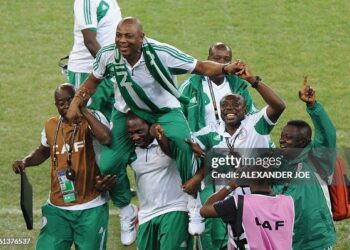
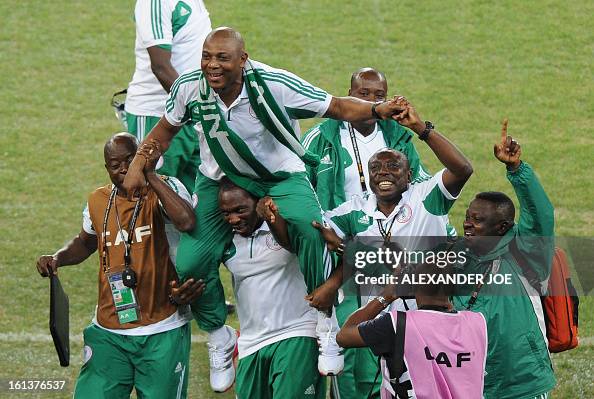
On a dramatic night at the Cape Town Stadium, Nigeria’s home-based Super Eagles pulled off what remains the most audacious and spectacular comeback in the nation’s modern football history under the tactical guidance of the late, legendary coach Stephen Keshi.
Facing regional rivals Morocco in the quarterfinals of the 2014 African Nations Championship (CHAN), the Super Eagles appeared dead and buried by half-time, trailing 3-0.
What followed in the second half and extra time was a masterclass in resilience, mental fortitude, and tactical adjustments that defined “The Big Boss” and his historic tenure.
The CHAN tournament, exclusively reserved for players operating in their domestic leagues, saw Nigeria making its debut appearance.
Expectations were modest, but after navigating the group stage, Keshi’s men hit a brick wall in the form of a highly disciplined Atlas Lions of Morocco.
Morocco exploited structural vulnerabilities in the Nigerian defence early on.
By the 40th minute, a relentless Moroccan attack had breached the Super Eagles’ backline three times, leaving goalkeeper Chigozie Agbim helpless and the technical bench stunned.
As the referee blew the half-time whistle, fans, and analysts across Africa wrote off the Nigerian squad, assuming the second half would merely be an exercise in damage control.
What transpired inside the dressing room became the turning point of the tournament.
Known for his charismatic, fatherly, yet stern leadership, Keshi did not panic.
According to post-match reports from Ghanasoccernet, Keshi challenged his players’ pride, urging them to fight not just for the match, but for the badge and the millions of Nigerians watching.
“I am a fighter and my men have to follow me,” Keshi reflected in his post-game media brief.
“I believed that if Morocco can score three, then we could score four or five. The trick is getting the players to buy it.”
The Super Eagles emerged from the tunnel looking like an entirely different unit.
The tactical shift was immediate, as Nigeria choked the Moroccan midfield and utilized explosive wing-play to destabilize the Atlas Lions.
49th Minute: Midfielder Ugonna Uzochukwu sounded the initial note of the revolution, latching onto a loose ball to score Nigeria’s first goal.
56th Minute: The momentum swung decisively when talismanic midfielder Rabiu Ali fired home a powerful strike, reducing the deficit to 3-2.
90th Minute: With Morocco parking the bus to defend their slim lead, the tournament’s eventual Most Valuable Player, Ejike Uzoenyi, struck a stunning late equalizer to complete the 3-3 comeback in regulation time, sending the Nigerian bench into delirium.
With the match pushed into extra time, the psychological advantage was firmly with Nigeria.
The Moroccans, visibly exhausted and demoralized after surrendering a three-goal cushion, struggled to maintain tactical cohesion.
The definitive moment arrived in the 111th minute.
Seizing upon a costly handling error by the Moroccan goalkeeper, substitute Aliyu Ibrahim Abubakar pounced on the ball and slotted it into the back of the net.
The extraordinary 4-3 turnaround was complete.
The victory cemented Keshi’s status as a master motivator and tactical heavyweight.
Having already guided the main Super Eagles team to the 2013 Africa Cup of Nations (AFCON) title a year prior, this CHAN comeback showcased his unique ability to replicate success using entirely domestic talents.
While Nigeria eventually secured a bronze medal in that tournament, the 4-3 thriller against Morocco remains celebrated alongside the 1989 “Miracle of Damman” as one of the greatest resilience stories in Nigerian football history.
Years after his untimely passing, the Cape Town comeback stands as a monument to Keshi’s unwavering faith in the Nigerian domestic player.
#football #SuperEagles #supereaglesofnigeria #nigeria
Nigeria Super Eagles
@topfans