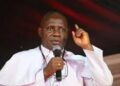














The President of the Christian Association of Nigeria (CAN), Archbishop Daniel Okoh, has called on the Church to hold government accountable, defend vulnerable citizens and maintain its independence from political interests.
However, he cautioned Christian leaders against partisanship, stressing that the Church must address matters of public interest with fairness, accuracy and a commitment to the common good.
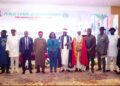
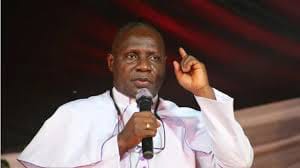
Okoh spoke on Saturday in Abuja during the 50th anniversary celebration of CAN, where he urged Christian leaders to adopt a bold and constructive approach to national issues without compromising the Church’s moral responsibilities.
Delivering a homily titled “CAN at 50: A Prophetic Voice of Hope,” the cleric said the Church must speak out against injustice and draw attention to the plight of Nigerians whose concerns are often neglected.
He identified internally displaced persons, out-of-school children, unemployed youths, farmers prevented from accessing their farmlands by insecurity, women subjected to violence and victims of human trafficking as vulnerable groups requiring urgent attention.
According to him, the Church must remain a voice for those who cannot adequately defend themselves while ensuring that its interventions are guided by truth, justice and a genuine concern for human dignity.
However, Okoh warned that speaking against injustice should not be misconstrued as blanket opposition to government policies or used as a platform to advance partisan political interests.
“A responsible watchman must be accurate. He should not raise alarm simply because he dislikes a policy or disagrees with a political leader,” he said.
On the appropriate relationship between the Church and government, the CAN president advocated a balanced approach that allows religious institutions to cooperate with authorities when necessary while challenging policies and actions that undermine justice.
“Collaborate where common good requires it, challenge where justice requires challenge, commend where government does well and warn where government fails, while maintaining the Church’s independence,” he said.
Okoh said CAN’s next 50 years should be devoted to strengthening research, advocacy and institutional capacity while promoting justice, human dignity, religious freedom, democratic institutions and the welfare of vulnerable Nigerians.
He also stressed the importance of preserving the unity that informed CAN’s establishment in August 1976, warning that divisions among Christian denominations could weaken their collective influence on national affairs.
Reflecting on the association’s history, he acknowledged that its early years were marked by mutual suspicion and the exclusion of some Christian traditions. However, he noted that successive leaderships had worked to build a more inclusive organisation.
“At 50, all the church traditions in Nigeria are represented in CAN through the following major blocs: CSN, CCN, CPFN/PFN, OAIC and TEKAN/ECWA. The last time I checked, no one is missing on the table,” he said.
The cleric cautioned Christians against taking the progress made in promoting unity for granted, urging them to avoid denominational rivalries and disagreements, particularly on social media, that could damage relationships within the Christian community.
He maintained that CAN belonged to all Christians, not merely its elected and appointed leaders, and called for the elimination of lingering divisions among denominations.
Using the biblical image of a watchman, Okoh said the Church must identify threats to justice and human dignity, alert those in authority to their responsibilities and stand up for citizens exposed to hardship and injustice.
He also urged Christians to complement their prayers for Nigeria with practical action, personal integrity and accountable leadership.
“Nigeria can be better — Nigeria will be better! But hope requires responsibility: prayer must be accompanied by positive action, faith by integrity, leadership by accountability and freedom by responsibility,” he said.
Okoh said CAN’s golden jubilee should mark the beginning of a renewed commitment by the Church to national development, particularly through the protection of human dignity, the promotion of national unity and the demand for accountability from those in positions of authority.