











It has been revealed that the proposed 2027 budget of Delta State will be about ₦500 billion less than that of the 2026 fiscal year of ₦1.7 trillion.

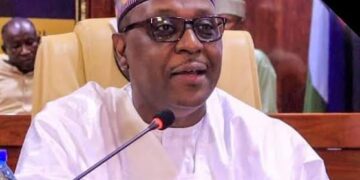
The State Commissioner for Economic Planning, Mr. Sonny Akporokiamo Ekedayen; made the revelation during an engagement with traditional rulers, Presidents-General of communities, members of Civil Society Organisations, amongst others, on the preparation of the 2027 budget, and the review the 2026 budget, christened 2026 Delta State Citizen’s Budget.
Ekedayen said the 2027 proposed budget would be within the range of ₦1.2 and ₦1.3 trillion, barring the adjustment that would be made by the State Assembly.
He said the downward review was informed by the necessity of the state to live within its means, explaining that the ₦500 billion saving that supported the 2026 budget was no longer there, while the expenditure of government was expected to reduce due to the transition that would take place in 2027.
The Commissioner stated that 65% of the proposed compact budget would be for capital expenses, while 35% would be earmarked for recurrent expenses, with focus on completion of ongoing projects and the introduction of high-impact new ones, especially roads to catalyse and boost interconnectivity and economic activities.
Ekedayen added that emphasis would be on consolidating the achievements recorded over the past three years to ensure that nothing was left to hang, recalling that Governor Sheriff Oborevwori inherited some uncompleted projects, which he completed, and would not want to leave any project uncompleted by the end of his first tenure in office.
He said government would also prioritise the welfare and well-being of the people, especially the economically-challenged, by deepening social intervention initiatives that would guarantee their inclusivity and prosperity.
On the Citizen’s Budget, he said it explained in plain language: Where the money would come from, where it would go, and the key projects for 2026 so that every Deltan could understand and track it.
The Commissioner said as a signatory to the Open Government Partnership (OGP), Delta State was committed to transparency, pointing out that the budget could be tracked by visiting the state’s official website to download the full budget, joining town hall meetings in the LGAs, monitoring projects across the communities and giving feedback, consistently paying taxes and other relevant levies, protecting public facilities including oil and gas assets, as well as providing information to security agencies whenever there was a breach of peace.
Ekedayen said the 2026 budget had achieved 69% performance by the end of September, with recurrent expenses accounting for 90% performance, while capital expenses recorded 60% performance.
He disclosed that the cumulative debt profile of the state, which stood at ₦463 billion at the inception of the Oborevwori administration, had been reduced to ₦63 billion, with prospects of being completely cleared before the end of the first quarter of next year.
In his goodwill message, the Asagba of Asaba, His Royal Majesty, Prof Epiphany Azinge; SAN, OON, said he was impressed with the budgetary allocations for road infrastructure, education and health, and commended the state government.