





















Delta State Government says it is set to earn significant gains from its huge investment in tertiary education.
It said that it expects to earn the gains from its expansion of institutions, infrastructure, staffing and student access expected to translate into stronger human capital, innovation and solutions to local development challenges.
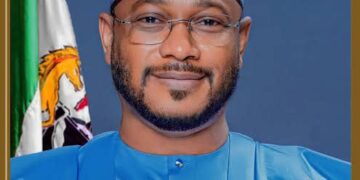
The State Commissioner for Higher Education, Prof. Nyerhovwo Tonukari, made this disclosure at the 3rd Delta State Higher Education Summit held at the Southern Delta University (SDU), Orerokpe Campus, where he delivered a lecture titled “Repositioning Tertiary Institutions for National Development and Institutional Responsibilities.”
Tonukari said the state had made remarkable progress in expanding access to higher education, noting that the number of students in Delta-owned tertiary institutions had risen from just over 50,000 in 2023 to more than 100,000.
He attributed the expansion to deliberate consistent investment by successive administrations, particularly the administration of Governor Sheriff Oborevwori, which, he said, had constructed faculties, administrative buildings and laboratories, funded resource verification and accreditation exercises, and employed more than 1,250 academic and non-academic staff.
According to him, the State Government had also approved male and female hostel accommodation for all nine state-owned tertiary institutions, with work already underway in Burutu, Agbor and Asaba, while efforts had continued to complete abandoned projects across the institutions.
He added that the state had extended its support beyond its own institutions by constructing a faculty for the Nigeria Maritime University, Okerenkoko, an access road for the Federal University of Petroleum Resources, Effurun, and providing buses for the Federal University of Medical and Health Sciences, Kwale, without prejudice to its ongoing construction of a large hall for Novena University, Ogume.
The Commissioner said the scale and spread of investment, alongside the expansion of access, required the institutions to demonstrate measurable impact, rather than merely increase admission figures or the number of certificates awarded.
“A university must be able to tell us the problems it is solving. A polytechnic must be able to demonstrate the technologies and skills it is producing. A college of education must demonstrate the quality of teachers it is preparing for our schools,” he said.
Tonukari identified graduate employability, problem-solving research, institutional specialisation, digital transformation, financial sustainability, quality and integrity, and community impact as seven key responsibilities tertiary institutions must prioritise.
On employability, he urged institutions to align their curricula with the realities of the economy, stressing that graduates should leave school with digital skills, critical-thinking ability, effective communication, entrepreneurial capacity and a commitment to life-long learning.
He also called for entrepreneurship centres and the Students Industrial Work Experience Scheme (SIWES) to become more practical, while urging institutions to strengthen relationships with industry so that classroom learning responds to workplace demands.
The Commissioner challenged tertiary schools to redirect more research towards practical solutions to Delta’s development challenges, including economic transition, agriculture, flooding, erosion, environmental degradation and access to healthcare.
He said research should move beyond academic shelves to produce patents, products, services, technologies and policies capable of being adopted by government, industry and communities.
Tonukari also advocated institutional specialisation, saying each tertiary school should develop areas in which it could attain national or international recognition.
He cited DELSU’s potential as a major research institution, Southern Delta University’s prospects for developing technology hubs around Ozoro, and Delta State Maritime Polytechnic, Burutu’s potential to produce specialists in maritime and blue-economy fields.
On the summit’s theme of Artificial Intelligence ( AI) and Technology in Tertiary Institutions, the Commissioner said AI was already transforming education, research, administration and the workplace, but warned against allowing technology to weaken students’ ability to think independently.
He said Delta’s institutions should produce graduates who could use AI to analyse, innovate and solve problems, while retaining human qualities such as judgement, ethics and creativity.
He also called for the development of smart campuses through digital records, stronger e-learning platforms, computer-based testing and improved digital literacy.
While acknowledging government’s responsibility to fund tertiary education, Tonukari urged institutions to explore alternative revenue sources, including research grants, consultancy, professional programmes, alumni endowments, intellectual property, commercial ventures and carefully structured public-private partnerships.
He also stressed that expansion must not compromise academic standards, and urged institutions to maintain accreditation, protect examination integrity and ensure stable academic calendars.
The Commissioner said the ultimate measure of Delta’s investment should be the impact tertiary institutions make on their immediate communities, urging them to provide extension services, agricultural support, community health programmes, adult education and youth mentorship.
He also called on Vice-Chancellors, Rectors and Provosts to give their institutions distinctive identities, build stronger partnerships with industry and prepare students for a rapidly changing world.