







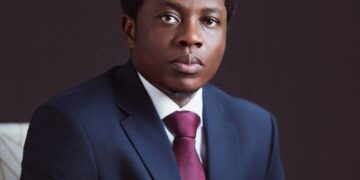


The Chairman of the Economic and Financial Crimes Commission (EFCC), Mr Ola Olukoyede, has expressed concern over the involvement of some religious figures in financial crimes in the country.

Olukoyede said this on Wednesday at the 2026 Second Council Meeting of the Nigeria Inter-Religious Council (NIREC) in Abuja, with the theme, “Shared Sacred Flourishing in Nigeria.”Download Interactive Maps
The EFCC chairman noted that pastors, imams, bishops, sheikhs and other religious leaders were among persons investigated, prosecuted and convicted for such offences.
He added that the commission’s case files contained numerous suspects identified by religious titles, with some already convicted and serving prison sentences.
He said the EFCC case was full of several suspects identified by religious titles, including pastors and imams, with some already convicted and serving prison sentences.
He observed that in spite of their convictions and imprisonment, some of the individuals continued to be addressed by their religious titles.
“And while in jail, they still refer to them as pastor and imam,” he said.
Olukoyede therefore advocated a review of the manner in which religious titles were conferred on individuals, saying titles should not become a shield against accountability.
“I advocated for a review of the titles we give to men of God. Maybe, if it is possible for us to remove those titles, pastor and imam.
“If it is possible for us to remove that title: pastor, Imam, bishop, sheik. And you know what? I have my case files full of these titles,” he said.
The EFCC chairman said the development required serious reflection on the qualities that should define a genuine man of God.
“So, it is something for us to really think about. Maybe, we are just to recognise them as men of God,” he said.
According to him, genuine spirituality should be demonstrated through conduct and integrity rather than outward appearance or self-acclaimed religious status.
“Because the spirit of God is by their fruits, not their appearance. Not what we call ourselves. It is by the fruits,” Olukoyede said.
He recounted an incident involving a suspect who was brought to the EFCC for investigation and demanded to meet him because of the religious titles he claimed.
“Somebody was brought in for investigation. And he demanded to see me… As he entered, he said, I am reverend, doctor, bishop,” he narrated.
Olukoyede said he disregarded the titles and concentrated on the allegation against the suspect, stressing that religious identity could not override the law.
He warned that nobody would be protected from prosecution merely because of his or her religious status or position.
“So, if you think you’re a Christian or you’re a pastor here, and you commit financial crime, I will be your enemy. I won’t be your friend,” he declared.
The EFCC chairman said he was honoured to participate in the NIREC meeting because of the importance of the theme, “Shared Sacred Flourishing in Nigeria.”Download Interactive Maps
He noted that NIREC was established in recognition of Nigeria’s religious diversity and the need to ensure that such diversity did not become a source of division.
“We are a deeply religious people. Our churches and mosques are full,” Olukoyede said.
He, however, challenged Nigerians to consider whether the depth of their religious commitment was sufficiently reflected in the integrity of public and economic life.
“Yet, we must have the courage to ask ourselves, has the depth of our religious profession been sufficiently reflected in the integrity of our public and economic life?” he asked.
Olukoyede stressed that financial crime had no religion or ethnic coloration.