












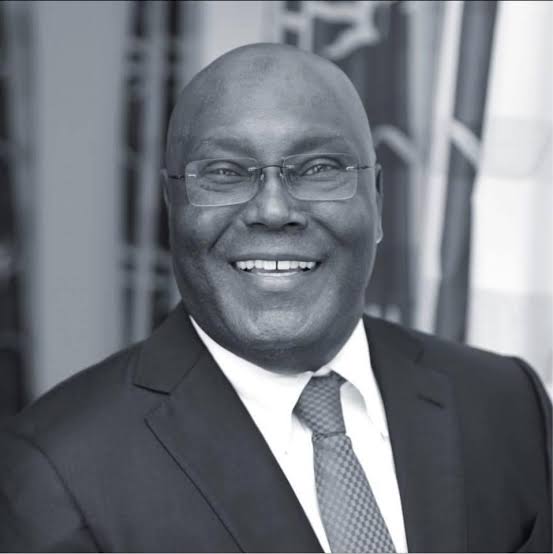

By Engr Paul Arabome ( MSPE, MNMGS, MPI)
To my fellow Nigerians at home and in the diaspora,
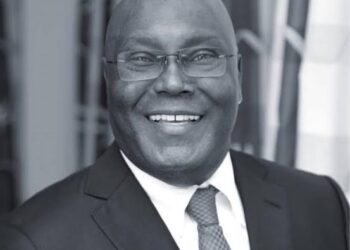
Our nation stands at a defining crossroads. As we look toward the future, many of us are reflecting deeply on the kind of leadership Nigeria needs—leadership grounded in competence, experience, unity, and an unwavering commitment to national progress. It is within this context that I, Engr. Paul Arabome, feel compelled to share my perspective on Atiku Abubakar, a man whose public service record and personal attributes continue to resonate with millions of Nigerians.
Atiku Abubakar’s Sterling Qualities
1. Proven Administrative Experience
Atiku’s decades of involvement in public service—most notably as Vice President—have given him a rare, practical understanding of Nigeria’s governance architecture. His role in driving economic reforms, supporting private-sector growth, and championing institutional modernization remains one of the most referenced examples of effective leadership in our Fourth Republic.
2. Commitment to National Unity
Nigeria’s diversity is both our strength and our challenge. Atiku has consistently demonstrated an ability to build bridges across ethnic, religious, and regional divides. His political alliances and personal relationships reflect a leader who sees Nigeria not as fragments, but as a collective destiny.
3. Economic Vision Rooted in Practicality
Atiku’s long-standing advocacy for restructuring, economic liberalization, and job creation is grounded in global best practices. His proposals emphasize empowering states, stimulating investment, and reducing the bureaucratic bottlenecks that stifle innovation.
4. Capacity to Attract Talent
A hallmark of effective leadership is the ability to assemble competent teams. Atiku has repeatedly shown a willingness to surround himself with technocrats, reformers, and experts—people chosen not for patronage, but for performance.
5. Consistency in Democratic Engagement
Through victories and setbacks, Atiku has remained committed to democratic processes. His insistence on legal redress, rather than extra-constitutional measures, reinforces his belief in the rule of law.
Addressing the Accusations by Babachir Lawal
In recent times, Babachir Lawal has made several allegations against Atiku Abubakar. As a patriotic Nigerian, I believe it is important to address these claims with clarity and fairness.
1. On Questions of Integrity
Many of the accusations leveled against Atiku have been recycled for decades without judicial conclusion. It is important to note that no competent court of law—within or outside Nigeria—has convicted Atiku Abubakar of corruption. Allegations, no matter how loudly repeated, do not equate to guilt.
2. On Claims of Political Opportunism
Atiku’s political journey reflects the evolution of a man seeking platforms aligned with his reformist ideals. Nigerian politics is fluid, and many leaders—including those now criticizing him—have themselves traversed multiple political parties. Singling out Atiku for this is selective and unfair.
3. On Assertions of Ethno-Religious Bias
Atiku’s life story contradicts such claims. His partnerships, business ventures, philanthropy, and political alliances span every region of Nigeria. He has repeatedly emphasized inclusion and has demonstrated it in practice.
4. On Personal Attacks and Character Assassination
Public discourse should be grounded in facts, not personal grievances or political realignments. Nigerians deserve debates based on ideas, competence, and vision—not bitterness or vendettas.
A Call for Constructive National Dialogue
As we move toward the next electoral cycle, I urge Nigerians to evaluate leaders based on:
their track record,
their capacity to unite the nation,
their economic vision,
their respect for democratic norms, and
their ability to deliver results.
Atiku Abubakar, in my view, embodies these qualities. Whether one agrees or disagrees, our national conversation must remain respectful, evidence-based, and focused on Nigeria’s future.
Let us rise above misinformation, divisive rhetoric, and personal attacks. Nigeria deserves better. Nigeria deserves leaders who can heal, build, and transform.
With sincere patriotism,
Engr. Paul Arabome (MSPE, MNMGS, MPI)