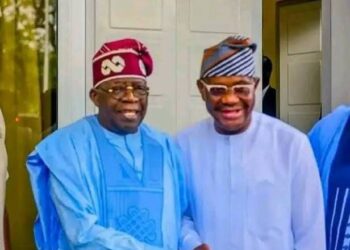























The Presidency has berated opposition parties for what it described as constant lamentation and unwarranted outrage over the newly amended Electoral Act and the administration of President Bola Tinubu.
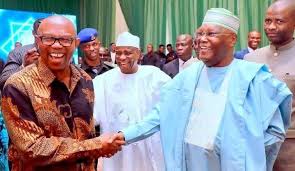
Some prominent opposition figures, led by the African Democratic Congress (ADC) and the New Nigeria Peoples Party (NNPP), had gathered in Abuja on Thursday where they made allegations against the President and the APC-led Federal Government.
In a statement issued by Presidential spokesman Bayo Onanuga, the Presidency lampooned the opposition for spreading misinformation and exhibiting what it described as a lack of direction.
According to the statement, the opposition—particularly the ADC—has turned “irresponsible political statements into an art form,” allegedly in a bid to attract cheap headlines and mislead the public.
Electoral Act Amendment
The Presidency stated that the National Assembly amended the Electoral Act to allow for real-time transmission of election results while retaining Form EC8A as a backup in the event of network failure.
It dismissed claims that the use of Form EC8A creates loopholes for manipulation, describing such concerns as illogical.
“Any reasonable Nigerian understands that network glitches are a real issue. The 2026 Electoral Act does not prohibit real-time transmission; it simply stipulates that if transmission fails, the result recorded on Form EC8A shall be deemed valid,” the statement said.
The Presidency also clarified that the IReV (INEC Results Viewing Portal) is not a collation centre but merely a platform for uploading results for public viewing, noting that the primary source for validating election results remains Form EC8.
Direct Primaries Controversy
The opposition parties had also rejected the reintroduction of direct primaries as a method for selecting party candidates.
However, the Presidency expressed surprise at the criticism, arguing that direct primaries and consensus voting restore power to party members rather than relying on what it described as a corrupt delegate system.
It further noted that the presidential system Nigeria operates—borrowed from the United States—utilises similar mechanisms for candidate selection.
Allegations of One-Party State
Addressing claims that President Tinubu aims to turn Nigeria into a one-party state, the Presidency described the allegation as baseless.
“Nigeria remains a vibrant multiparty democracy with more than a dozen registered political parties, including ADC and NNPP,” the statement said.
It added that President Tinubu himself was once an opposition leader who played a key role in unseating the PDP in 2015, insisting that he remains committed to democratic principles.
Call for Introspection
The Presidency concluded that the opposition’s protests stem from discomfort with reforms that allegedly close loopholes for electoral manipulation.
Rather than constant outrage, it advised ADC and NNPP leaders to focus on internal reorganisation and strengthening their parties ahead of future elections.