





















*Pushes for New National Carrier

The Senate, on Tuesday, rejected calls for the revival of the defunct Nigeria Airways and Air Nigeria.
Rather, it insisted that the Federal Government should, instead, focus on establishing a viable national carrier capable of operating sustainably and flying the Nigerian flag internationally.
The Upper Chamber of Nigeria s bicameral legislature also urged the Federal Government to renegotiate and strictly enforce Nigeria’s Bilateral Air Services Agreement (BASA) with China to secure reciprocal flight access for Nigerian airlines and enable them to operate direct flights to the Asian country.
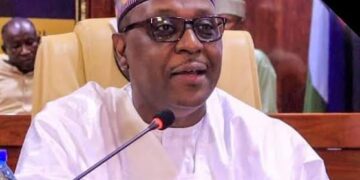
The resolutions followed a motion titled “Enforcing the Bilateral Air Service Agreement (BASA)”, sponsored on Tuesday by the Senate Whip, Senator Mohammed Tahir Monguno (APC, Borno North).
The Senate called for an urgent review of existing aviation arrangements between Nigeria and China to address the imbalance in flight operations and ensure that Nigerian carriers enjoy the same access and privileges extended to Chinese airlines.
It also urged the Federal Ministry of Foreign Affairs to initiate diplomatic engagements with China on business visa facilitation for Nigerian traders and reciprocal airport slot allocations for Nigerian airlines.
The Senate also mandated its Committees on Aviation and Foreign Affairs to monitor compliance with the resolutions and report back within four weeks.
An additional prayer by Senator Ned Nwoko (APC, Delta North), seeking the revival of the defunct national airline, however, triggered a debate before it was dismissed.
President of the Senate, Senator Godswill Akpabio, questioned the rationale behind attempting to revive an airline that had long ceased operations, arguing that Nigeria should concentrate on building a new and commercially viable national carrier.
“We can’t revive what is already dead,” Akpabio declared, questioning whether the defunct Nigeria Airways had ever operated efficiently.
While acknowledging the importance of having a Nigerian-owned airline, Akpabio recalled that the country once operated a fleet of nearly 40 aircraft but had since deteriorated to a situation where it struggled to secure aircraft for hire.
He also warned that Nigeria might be compelled to reconsider the operational privileges granted to Chinese airlines if Nigerian carriers continued to be denied reciprocal access to Chinese airports.
The debate comes against the backdrop of the controversy surrounding the proposed Nigeria Air project, whose aircraft was unveiled in May 2023. The aircraft was alleged to have been a chartered Ethiopian Airlines plane leased for a 72-hour display before returning to Addis Ababa.
Presenting the motion, Monguno argued that the growing economic and trade relationship between Nigeria and China made direct air connectivity increasingly necessary.
He noted that the absence of balanced flight arrangements was undermining the economic benefits Nigeria could derive from its bilateral relationship with China.
According to him, a properly enforced BASA would reduce travel time, improve supply-chain efficiency, strengthen commercial activities, retain foreign exchange within the Nigerian economy and expand opportunities for non-oil exports.
Monguno also highlighted the enormous economic potential of the relationship, citing the significant volume of trade between the two countries and the large communities of Nigerian and Chinese nationals living in each other’s territories.
He said direct scheduled flights between Nigeria and China would transform the Murtala Muhammed International Airport, Lagos, and the Nnamdi Azikiwe International Airport, Abuja, into major aviation gateways connecting West and Central Africa with East Asia.