















By Dr. Festus Goziem Okubor writing from Ute-Erumu
There are moments in the life of every nation when the people must decide whether they want comfort today or prosperity tomorrow. Civilisations are not built by leaders who merely echo the wishes of the crowd. They are built by men and women who possess the courage to tell uncomfortable truths and take difficult decisions.
History is remarkably consistent on this point.
Singapore did not become Singapore because Lee Kuan Yew governed by opinion polls. India did not emerge as a global economic force because Prime Minister P. V. Narasimha Rao and his Finance Minister, Dr. Manmohan Singh, were afraid of unpopular reforms in 1991. China did not lift hundreds of millions out of poverty because Deng Xiaoping chose political convenience over economic necessity.
Great nations are rarely transformed by timid leadership.
Nigeria has now arrived at one of those defining historical moments.
For decades, successive governments knew that the fuel subsidy regime had become a gigantic drain on public finances. Every serious economic review reached the same conclusion. Yet administration after administration postponed the inevitable because the political cost appeared too high.
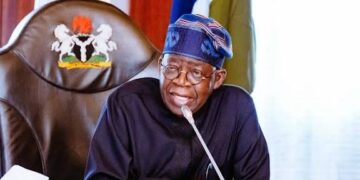
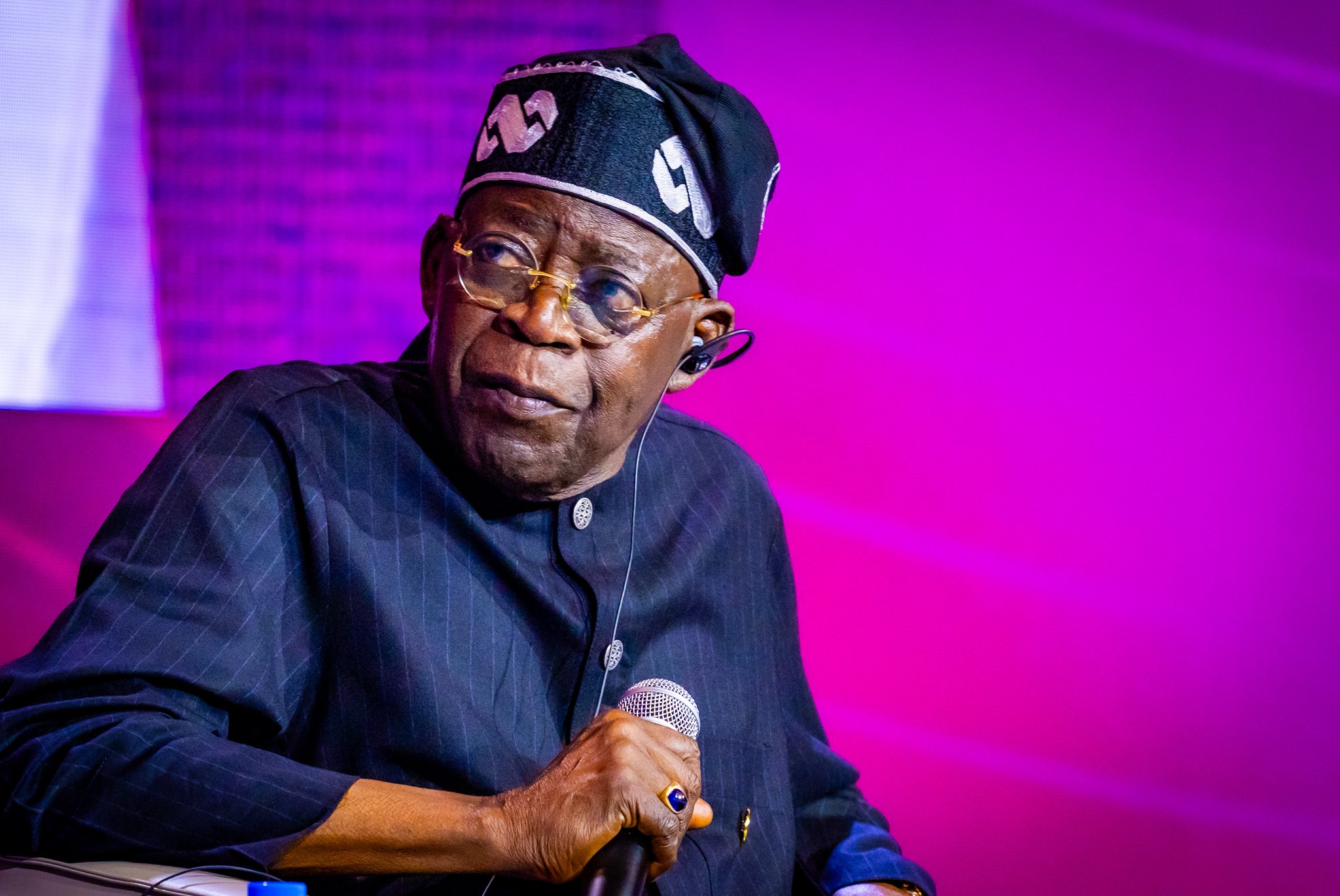
President Bola Ahmed Tinubu did not postpone it.
For years, economists warned that maintaining multiple foreign exchange windows created distortions, encouraged rent-seeking, discouraged investment, and rewarded speculation over production. Government after government acknowledged the problem but hesitated to confront it.
President Tinubu confronted it.
That distinction matters.
It is one thing to recognise a problem. It is another to summon the courage to solve it.
As a medical doctor, I often compare leadership to surgery. No responsible surgeon delights in causing pain. Yet when gangrene has set in, refusing to amputate may appear compassionate, but it condemns the patient. Sometimes the operation hurts precisely because it is saving the patient.
Nigeria’s economy had accumulated years of structural illness. Cheap fuel that was not truly cheap. Artificial exchange rates that enriched a few while impoverishing the nation. Public finances stretched beyond sustainability. Mounting debt obligations. Declining investor confidence. An economy consuming more than it was producing.
Ignoring those realities would not have spared Nigerians hardship. It would merely have delayed—and almost certainly worsened—the crisis.
Today, many Nigerians understandably feel the weight of rising prices. Families struggle. Businesses face higher costs. These hardships are real, and no responsible supporter of the government should minimise them. Compassion demands honesty.
But honesty also requires another admission.
Many of today’s hardships arise because the nation is correcting problems accumulated over many years. Structural reforms often produce immediate discomfort before their long-term benefits emerge. Economic history repeatedly demonstrates this pattern.
Already, signs of recovery are becoming visible.
State governments and local governments enjoy significantly improved revenues, enabling many to meet salary obligations more consistently and undertake infrastructure projects that had previously remained impossible.
The foreign exchange market, though still imperfect, has become more predictable than during the severe volatility that once paralysed planning and investment. Businesses increasingly plan with greater confidence because uncertainty itself has begun to diminish.
Investor interest has strengthened in several sectors. Public revenue mobilisation has improved. Fiscal discipline is receiving renewed emphasis. The foundations of a more productive economy are gradually being laid.
These developments may not yet put food directly on every family’s table. But they represent conditions without which lasting prosperity cannot be built.
No nation has ever subsidised itself into greatness.
No country has manipulated exchange rates indefinitely without eventually paying a heavy price.
No society has borrowed endlessly without consequences.
Some truths remain true regardless of whether they are politically popular.
This is why I remain convinced that President Tinubu possesses a quality increasingly rare in contemporary politics: the willingness to risk political popularity in order to pursue what he believes serves the national interest.
Leadership is not measured by applause at the beginning of a journey. It is measured by the destination eventually reached.
Many who now seek Nigeria’s highest office promise painless solutions. They criticise difficult decisions while carefully avoiding explanations of what they themselves would do differently. It is always easier to condemn surgery than to perform it.
Every serious presidential aspirant should therefore answer simple questions.
Would you restore the fuel subsidy? If so, how would you finance it?
Would you return to multiple exchange rates? If so, how would you prevent arbitrage and corruption?
Would you borrow even more heavily? If so, how would future generations repay those debts?
Would you continue postponing difficult decisions because they are politically inconvenient?
The Nigerian people deserve more than slogans. They deserve detailed alternatives.
Criticism is indispensable in every democracy. Indeed, no administration should ever be insulated from scrutiny. Constructive criticism strengthens governments by exposing weaknesses that require correction. But criticism without credible alternatives soon becomes performance rather than leadership.
The years ahead will still require perseverance. Inflation must continue to fall. Food production must expand. Security must improve. Manufacturing must grow. Youth employment must accelerate. Governance must become more efficient. These remain urgent national priorities.
Yet reforms require time before they fully mature.
The Chinese bamboo offers a profound lesson. For years after planting, almost nothing appears above the ground. Yet beneath the soil, an extensive root system is quietly developing. Then, once the foundations are complete, extraordinary growth follows within a remarkably short period.
Nations often grow in precisely the same way.
History seldom remembers those who merely criticised difficult reforms. It remembers those who possessed the courage to undertake them.
An old African proverb says that “the child who fears the bitterness of medicine may never live long enough to enjoy its sweetness.”
Nigeria’s present season resembles that bitter medicine.
The question before Nigerians is not whether today’s reforms involve sacrifice. They clearly do.
The more important question is whether we possess the patience, discipline and national resolve to complete the treatment rather than abandon it halfway.
I believe we do.
And I believe President Bola Ahmed Tinubu has thus far demonstrated a rare quality in Nigerian public life: the courage to choose national recovery over personal popularity.
History, not headlines, will ultimately render the final verdict.