
















By Magnus Onyibe

In this column last week, in a piece titled : 2027 Party Election Season ls Here,But Should lt Equate to Anomie?,l started discussing how retaining or reversing petrol subsidy removal is defining the 2027 elections and dwelt extensively on how the masses, under the threat of being crushed by the negative effects of petrol subsidy removal, are being offered succour through a one-billion-dollar investment in providing Compressed Natural Gas (CNG) buses and vehicles. But apparently, that measure has been to no avail, since the transportation pains of the masses have not abated. Hence, the main opposition party candidate is capitalising on that pain point as a rallying point for his campaign to unseat the incumbent occupant of the presidential seat of power at Aso Rock Villa. Unsurprisingly, the campaign against petrol subsidy removal appears to be gaining momentum.
In a country where the masses, businesses, and even governments have become accustomed to cheap petrol and built their budgets and lives around it, it becomes difficult to get weaned off it. Hence, petrol subsidy, which has become a bad habit, has remained deeply entrenched, even though many of the economic woes being faced by Nigerians have been traced to this apparently wrong-headed policy. Yet, it has become the single biggest fault line ahead of the 2027 general elections.
For over 40 years, starting from the rule of General Yakubu Gowon (1966–1975), cheap petrol, which was introduced in 1973 to help cushion the harsh effects of high inflation induced by 1973 Arab – Israeli YomKippur War which causedcrude oil price to jump from $3-$12 within momths, and which was meant to be a temporary measure, gradually became regarded as a “right” by Nigerians. While Gowon intended the intervention to prevent price shock, many came to feel entitled to it because of the mistaken notion that Nigeria is a rich country.
As such, any government or administration that dared to remove it was dubbed “wicked.”
That is because, as time went by, the economy adapted to it. Transporters, generator operators, food sellers, and even wage earners all fixed their prices and costs with the subsidy in mind.
Hence, its removal now feels like a punishment.
Even when economists say it is necessary, most Nigerians, who had become accustomed to the fuel-subsidy bazaar, initially resisted it. Thereafter, however, they have gradually come to accept the reality, even though some are still questioning the methodology and manner of its removal.
Clearly, dependency is why removing it is politically explosive. Expectations surrounding cheap petrol have been hard-wired into the national mindset, which is why the battle cry for the general elections commencing on January 25, 2027, with the presidential and National Assembly elections, is: “We will bring back petrol subsidy.”
In defence of subsidy removal, the incumbent administration has made the case that the removal, although tough, can be likened to administering medicine for a cancerous disease before it metastasises.
It has further justified its argument with the fact that Nigeria was spending between ₦4 trillion and ₦5 trillion annually on fuel consumption subsidies. But with subsidy removal, the money hitherto expended on it is now being channelled into the provision of infrastructure, student loans, Compressed Natural Gas (CNG), CNG buses, wage awards, increases in the minimum wage, salary increases for the military, and efforts to stem the persistent strikes by university lecturers, which had taken on the dimension of an epidemic.
Furthermore, the government’s narrative is that it had to rip off the band-aid, as it were, having come to the realisation that it was in the best interest of the nation to face the pain now and gain later, rather than watch the country collapse under the yoke of debt and an inability to meet its obligations.
These obligations included the payment of salaries and wages to government workers, some of whom were owed several months’ salary arrears. In addition, the government was struggling to service its international debts, even as international airlines were shutting Nigerian travellers out of their platforms for booking flights because of the inability of the country to remit funds owed to the airlines.
That situation was so scandalous that Nigerians were buying international flight tickets through portals in neighbouring countries, even as cheap Nigerian petrol, made possible by the subsidy regime, was being smuggled into those same countries.
The final argument of the incumbent administration was that Nigeria could no longer afford to subsidise the rich and petrol smugglers across its borders, thereby effectively subsidising the entire West African sub-region.
As elegant as the proposition of removing petrol subsidy may have appeared on paper, the risk of a spike in inflation, higher transportation costs and worsening hardship was always imminent—and palpable.
That is why the Federal Government did not simply remove the subsidy and walk away. It introduced a series of palliatives and alternatives intended to cushion the impact, including Compressed Natural Gas (CNG), CNG buses and other interventions aimed at reducing transportation costs.
But here lies the problem: the alternatives have not delivered succour quickly enough to satisfy millions of Nigerians struggling with the daily consequences of higher transportation costs.
And when economic pain persists, public anger inevitably follows.
That anger has now become political currency.
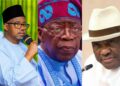
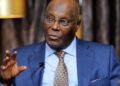
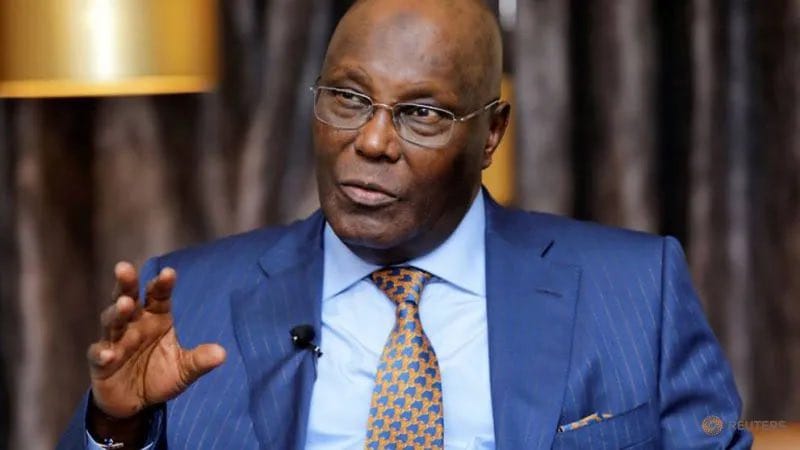
Leveraging the widespread frustration against the incumbent administration, the main opposition presidential candidate, Atiku Abubakar, the Waziri Adamawa and former Vice President of Nigeria, has placed the petrol subsidy question at the centre of his 2027 campaign.
Having operated at the highest echelon of government, Atiku is now promising to “return” or “review” the subsidy if given the opportunity to occupy the presidential seat of power at Aso Rock Villa.
Indeed, Atiku has sought to distinguish his proposal from the old subsidy regime by arguing for a targeted intervention tied to domestic refining. His campaign has also criticised the Tinubu administration for removing the subsidy without adequate safety nets.
It is an argument that sounds like music to the ears of Nigerians under severe economic pressure.
After all, when the cost of transportation rises, the price of food rises. When food prices rise, household incomes lose purchasing power. And when purchasing power collapses, even an increase in nominal wages can feel meaningless.
This is the political potency of the subsidy debate.
The Politics of Pain
For decades, Nigerians became accustomed to cheap petrol. Transporters, manufacturers, traders, farmers, generator operators, food sellers and households all structured their economic activities around an artificially low petrol price.
Over time, what began as an economic intervention became perceived as an entitlement.
That is the real subsidy dependency syndrome.
Any government that attempted to remove the subsidy was quickly branded “wicked,” regardless of the economic circumstances confronting the country.
The reason is simple: an economy eventually adapts to whatever pricing structure it has operated under for a sufficiently long period.
Transporters calculate their fares around fuel costs. Farmers calculate the cost of moving produce. Manufacturers factor energy and logistics into production costs. Traders incorporate transportation into the prices of their goods.
Therefore, when petrol prices suddenly rise, the consequences reverberate through virtually every aspect of economic life.
That is why subsidy removal feels to many Nigerians not like an economic reform but like a punishment.
Even when economists argue that subsidy removal is necessary, Nigerians who spent decades benefiting from the arrangement were understandably reluctant to embrace it.
Today, many have accepted that the old system could not continue indefinitely, but a significant number continue to question the manner, timing and methodology of its removal.
That distinction is important.
The debate is no longer simply about whether subsidy should exist.
It is increasingly about how Nigerians can survive without it.
And that is precisely why subsidy has become one of the biggest political fault lines ahead of the 2027 elections.
The Battle Cry of 2027
The political message emerging from the opposition is straightforward:
“We will bring back subsidy.”
Atiku has now placed the proposition firmly on the political table, arguing that government should intervene to make fuel more affordable, particularly while domestic refining capacity expands. His position has generated competing interpretations from his aides and criticism from the Presidency, but the political attraction of the message is undeniable.
For a Nigerian struggling to pay ₦1,000 or more for a journey that once cost a fraction of that amount, the economics of subsidy can seem less important than the immediate question:
“How do I get to work tomorrow?”
This is where political economics meets everyday survival.
The incumbent administration, however, has a counterargument.
Its position is that subsidy removal, although painful, was comparable to administering harsh medicine to a patient suffering from a serious disease before the condition becomes irreversible.
The argument is that Nigeria could no longer continue spending enormous sums subsidising consumption while simultaneously borrowing money to finance government obligations.
The administration maintains that the resources previously absorbed by subsidy can instead be deployed towards infrastructure, education, student loans, social investment, transportation, security, wages and other developmental priorities as it is currently doing.
The Presidency has also argued that the subsidy regime imposed substantial fiscal costs and that the petroleum market has changed significantly since 2023, particularly with the growth of domestic refining capacity led by Dangote Refinery currently exporting to refined petroleum products worldwide.
That is the economic case.
But politics is rarely decided by economic theory alone.
Politics is decided by how people feel.
And Nigerians are feeling the pain.
The Real Question: Who Will Make Transportation Affordable?
This is where the 2027 debate should become more sophisticated.
The question should not simply be:
“Should Nigeria bring back petrol subsidy?”
The more important question should be:
“How can Nigeria make transportation affordable for the masses without returning to a subsidy regime that drains public resources?”
That is a fundamentally different question.
And it points towards a potentially more effective solution: targeted transportation subsidies rather than universal petrol subsidies.
Instead of spending trillions of naira making petrol artificially cheap for everyone—including wealthy car owners, businesses and smugglers—government could target the actual means of transportation used by the majority of Nigerians.
This is where Keke and Okada become strategically important.
Why Keke and Okada Matter
Available studies indicate that road transportation accounts for the overwhelming majority of passenger movement in Nigeria.
Within that transportation ecosystem, motorcycles and tricycles occupy a critical position.
The reason is obvious.
They are relatively affordable, flexible and capable of navigating roads and traffic conditions that larger vehicles often cannot.
Okada has therefore become more than merely a means of transportation.
It is an economic institution.
It transports workers to their places of employment.
It carries traders to markets.
It connects rural communities to urban centres.
It transports agricultural produce.
It provides employment for millions of Nigerians directly and indirectly.
And Keke performs a similar function, particularly for low-income commuters.
So, when transportation costs rise, the impact on the operators and passengers of these vehicles is immediate.
That means government does not necessarily have to subsidise petrol to cushion the transportation crisis.
It can subsidise mobility itself.
Subsidising Jobs, Not Just Fuel
Consider Aba.
Research cited earlier indicates that there are more than 20,000 registered Keke operating in the city, with approximately 40,000 people involved in the wider Keke value chain, including riders, spare-parts dealers and unions.
That statistic should make policymakers pause.
If government subsidises the assembly and acquisition of electric Keke and motorcycles, it is not merely subsidising transportation.
It is subsidising jobs.
It is supporting manufacturers.
It is creating demand for locally assembled vehicles.
It is developing a domestic supply chain.
It is reducing fuel consumption.
It is lowering operating costs for transporters.
And, most importantly, it is reducing the transportation burden on passengers.
That is a far more targeted intervention than making petrol cheap for everybody.
The Electric Keke and Okada Opportunity
This is where the Tinubu administration can potentially complement its CNG strategy with a much more grassroots-oriented intervention.
Instead of concentrating primarily on the top end of the transportation market, government should look aggressively at the bottom.
If CNG buses are designed to serve mass transportation, electric Keke and motorcycles can serve the millions of Nigerians who depend on short-distance, low-cost transportation every day.
Government could establish a targeted financing programme under which Nigerian companies assemble electric Keke and motorcycles locally.
Operators could then access them through heavily subsidised loans, with repayment structured around their daily earnings.
The objective should be simple:
Reduce the cost of running the vehicle so that the operator can reduce the cost of transportation without losing his livelihood.
That is a much more sustainable model than simply paying the difference between the international cost of petrol and the price Nigerians pay at the pump.
From Trickle-Down to “Bottom-Up”
The Tinubu administration has placed considerable emphasis on reforms that are expected to produce benefits over time.
Development economists know that it usually takes two circles of development for real trickle down to happen but the ordinary man on the street does not know that hence the clamor for dividends of democracy immediately Nigerians facing hardships.
So, there is an inherent problem with relying predominantly on trickle-down economics during a period of severe hardship.
The benefits take time.
The pain is immediate.
That creates a political and social disconnect.
Despite Nigeria’s GDP rise to 4.4% and Nigeria’s foreign reserves growth to $53 billion a Nigerian struggling to afford transportation today cannot necessarily be persuaded by the promise that economic fundamentals will improve several years from now.
This is why the government needs a complementary bottom-up intervention.
CNG represents one component.
Mass transit represents another.
But electric Keke and Okada could become the missing grassroots component.
They can take the benefits of energy reform directly to the people who need them most.
Why Spend ₦4–5 Trillion Subsidising Petrol?
This is perhaps the most important question in the entire debate.
If Nigeria previously spent trillions of naira subsidising petrol consumption, why not deploy a fraction of that money to permanently reduce the cost of transportation?
Why not invest in vehicles that are cheaper to operate?
Why not assemble those vehicles in Nigeria?
Why not create thousands of jobs through their manufacture and maintenance?
Why not provide low-interest financing to the very people who operate them?
And why not make the passenger the ultimate beneficiary?
That would transform subsidy from a consumption subsidy into a productive subsidy.
Instead of subsidising the fuel, subsidise the asset that provides the transportation.
That is the paradigm shift Nigeria needs.
The American Example
The idea of government using incentives to accelerate the transition towards electric vehicles is not peculiar to Nigeria.
The United States has used a combination of tax incentives, consumer incentives and industrial policies to encourage electric-vehicle adoption and domestic manufacturing.
The objective has been broader than simply making cars cheaper.
It has included industrial development, technological advancement, energy security and environmental objectives.
Nigeria can adapt the principle to its own circumstances.
Our challenge is different.
We do not need to begin by subsidising luxury electric cars for wealthy Nigerians.
We should begin with the vehicles that ordinary Nigerians actually use.
Electric Keke.
Electric motorcycles.
Electric buses.
That is where the social return could be greatest.
The $2.5 Billion Opportunity
If the Tinubu administration has mobilised more than $2.5 billion from public and private-sector sources for interventions connected to transportation and energy transition, part of that financial muscle should be directed towards preventing further hardship by supporting local assembly of electric Keke and motorcycles.
The programme should not be designed as another government handout.
It should be structured as an industrial policy.
Local manufacturers should be incentivised to assemble the vehicles.
Financial institutions should provide affordable credit.
Operators should receive subsidised loans.
Battery-swapping and charging infrastructure should be developed.
And, critically, the entire value chain—from assembly to spare parts, batteries, repairs and recycling—should be localised as much as possible.
That way, the subsidy creates an economic ecosystem rather than simply financing consumption.
The 2027 Choice
This is ultimately what the 2027 election should be about.
Should Nigeria return to a system in which government spends enormous sums making petrol artificially cheap?
Or should it use targeted intervention to make transportation itself affordable?
Should the country continue subsidising consumption?
Or should it subsidise productive assets that create jobs and reduce operating costs?
Should government make petrol cheaper for everybody?
Or should it concentrate assistance on those who actually depend on public transportation to survive?
These are the questions voters should be asking.
Atiku Abubakar has correctly identified the political vulnerability created by the hardship associated with subsidy removal. His promise of a targeted subsidy has therefore gained traction because it speaks directly to the pain Nigerians are experiencing.
But identifying a problem is not the same as providing the best solution.
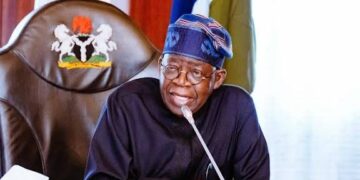
The Tinubu administration, on the other hand, cannot simply tell Nigerians to endure today’s hardship because tomorrow will be better.
It must make tomorrow visible today.
It must demonstrate that the painful reforms are producing tangible relief.
That means making transportation cheaper.
It means accelerating CNG adoption.
It means expanding mass transit.
And it means going beyond CNG to embrace electric Keke and motorcycles as a strategic component of Nigeria’s transportation revolution.
The Choice Before Tinubu.
The incumbent administration may still hold the aces—but only if it understands that economic reform must eventually translate into economic relief.
Nigerians do not eat macroeconomic indicators.
They do not ride foreign reserves.
They do not commute on GDP growth.
They do not cook with improved debt ratios.
They experience the economy through the price of food, the cost of transportation, the a