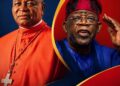
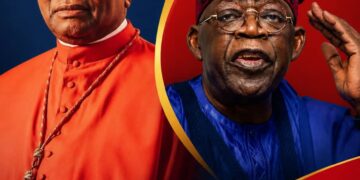


















The recent controversy arising from the meeting between President Bola Ahmed Tinubu and the Catholic Bishops’ Conference of Nigeria (CBCN) has become far more than a disagreement over economic statistics. It has evolved into a national conversation about leadership, truth, public accountability, and the relationship between government and the moral institutions of society.

At the heart of the matter lies a fundamental question: Should a nation’s progress be measured primarily by official statistics or by the daily experiences of its citizens?
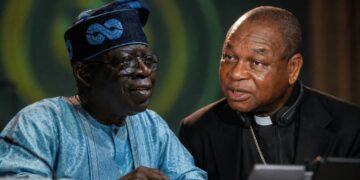
During the meeting, the Catholic bishops presented a sobering assessment of Nigeria’s condition. They spoke of widespread economic hardship, rising food prices, unemployment, and persistent insecurity, maintaining that it is the Church’s moral obligation to speak truth to power whenever the welfare of the people is threatened.
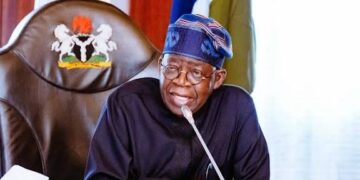
President Bola Ahmed Tinubu, on the other hand, defended his administration’s economic reforms, insisting that the difficult decisions being taken today are laying the foundation for long-term national stability. He also assured the bishops of the neutrality of the Independent National Electoral Commission (INEC) ahead of the 2027 general elections.
Ordinarily, such an exchange should have remained an example of healthy democratic engagement between the State and one of the country’s most respected moral institutions. Unfortunately, the situation deteriorated following public reactions from both sides, leading to accusations, political interpretations, and unnecessary polarization.
The subsequent media exchanges transformed what should have been constructive dialogue into a public relations contest. Rather than reducing tensions, some official responses appeared confrontational and dismissive, thereby deepening public skepticism.
Beyond the personalities involved, this episode exposes a broader governance challenge. Every nation must learn to prioritize its priorities. The first responsibility of any government is the protection and welfare of its people. Human needs remain the foundation upon which every successful society is built.
The right to life, public security, affordable food, productive agriculture, employment opportunities, quality healthcare, and accessible education should always occupy the highest position in national planning. While infrastructure and developmental projects are important symbols of progress, they cannot substitute for the daily welfare and dignity of citizens. Roads, bridges, and modern cities achieve their true value only when the people using them can live securely, work productively, and feed their families.
The Catholic bishops occupy a unique position within Nigerian society. Through decades of spiritual discipline, service, sacrifice, and commitment to humanity, they have earned enormous moral credibility across religious and political divides. While no institution is above criticism, the Catholic episcopacy has historically demonstrated remarkable restraint and a limited appetite for material or political gain. Their interventions have generally been guided by conscience rather than personal ambition.
For this reason, engagement with such distinguished religious leaders demands the highest level of diplomacy, respect, and emotional intelligence. Disagreement is natural in every democracy, but the language and manner of engagement often determine whether dialogue builds trust or widens division.
This is where the Presidency’s communication strategy appears to have fallen short. The President’s media handlers could have managed the situation with greater tact, empathy, and strategic restraint. Public disagreement with respected national institutions should never be allowed to degenerate into personal attacks or accusations that shift attention away from the substantive issues being raised.
Strong leadership is not measured by the ability to silence criticism but by the willingness to engage uncomfortable truths with humility and confidence. Democracies flourish when governments see constructive criticism as an opportunity to improve policy rather than as an act of hostility.
Likewise, religious institutions must continue to exercise their prophetic responsibility with fairness, evidence, and patriotism, always seeking national cohesion while holding leaders accountable.
Nigeria’s future will not be secured through statistics alone, nor through rhetoric. It will be secured by rebuilding public trust, strengthening institutions, and placing the welfare of ordinary Nigerians at the centre of governance.
The meeting between President Tinubu and the Catholic Bishops should not be remembered merely as another political controversy. Instead, it should serve as a reminder that the strongest nations are those whose leaders listen carefully, communicate wisely, and remain open to voices of conscience.
In the end, governments may command political authority, but moral authority is earned. Wise leaders understand the difference, and know when to listen.
Adai Edwin Adai
Policy Scientist, Political Economist, Pan-Africanist.
Executive Chairman
African Institute For Statecraft Int’L