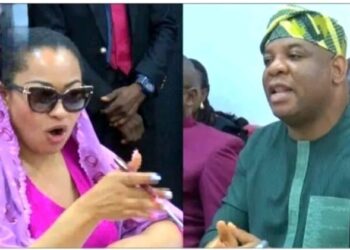


















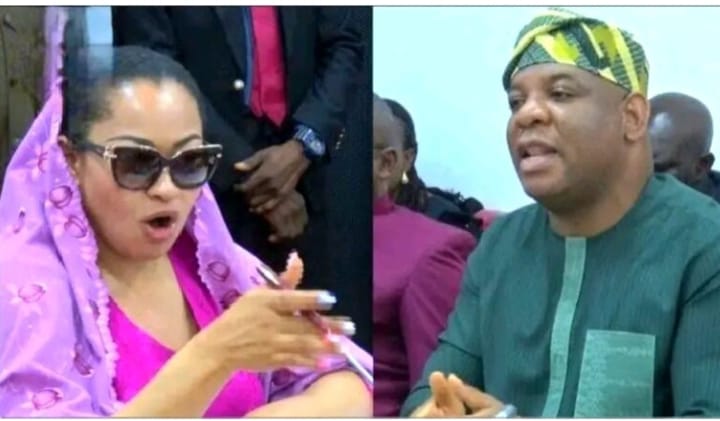


The recent clash between Senator Natasha Akpoti-Uduaghan, representing Kogi Central, and Prince Shuaibu Abubakar Audu, the Minister of Steel Development, during a Senate Committee oversight meeting has sparked considerable discussion. The confrontation unfolded during the question and answer segment of the meeting, which escalated into a heated exchange as Senator Akpoti-Uduaghan pushed for additional time beyond her allotted ten minutes.
Critics have described Senator Akpoti Uduaghan’s appeal for extra time as indicative of a larger strategy to evoke sympathy from the public. Her dramatic approach during the Budget defense was perceived by some as an effort to gain political leverage or support rather than focusing solely on policy issues at hand. This perception was exacerbated by the charged atmosphere of the meeting, which should ideally encourage constructive dialogue and accountability.
The fallout from this clash raises questions not only about the tone and tactics used in political discourse but also about the roles of elected officials in effectively representing their constituents. While Senator Akpoti-Uduaghan may feel justified in her motives for extending her speaking time, the manner in which she chose to advocate for her point could overshadow her substantive arguments and lead to the perception that her priorities might be more personal than political.
Such incidents in parliamentary settings are not uncommon. They often reflect the high-stakes nature of politics, where representatives strive to assert their positions while navigating interpersonal dynamics. However, it also highlights the need for lawmakers to engage in a manner that enhances rather than detracts from the legislative process. In volatile political climates, the challenge remains for representatives to balance assertiveness with decorum, ensuring that their actions effectively serve the interests of their constituents without resorting to theatrics.
The ongoing political challenges arising from Senator Akpoti-Uduaghan have been a source of confusion during significant sessions, such as the budget defense. This situation is particularly notable in the House of Representatives, chaired by Hon. Zainab Jimba from Borno State. Despite the complex questions posed by the committee, which involved extensive input from the Hon. Minister, the Permanent Secretary and MDAs, the session was peaceful and there was no dispute or rancor. This contrast highlights the issues stemming from Senator Akpoti-Uduaghan, suggesting a need for better alignment and communication among political figures to ensure a more cohesive approach during critical governmental discussions.
Prince Shuaibu Abubakar Audu, the Honorable Minister of Steel Development, has made significant strides in revitalizing the Ajaokuta Steel Company and advancing the Itakpe Steel Development project. His leadership has focused on the strategic importance of these steel facilities to Nigeria’s industrial growth and economic development. Under his guidance, efforts have been made to address long standing challenges, seeking to attract investments and implement necessary upgrades to enhance productivity. The revival of Ajaokuta Steel Company, in particular, is seen as a critical step toward achieving self-sufficiency in steel production, reducing reliance on imports, and fostering local job creation. The ongoing development at Itakpe Steel further complements these efforts, aiming to position Nigeria as a key player in the global steel market.
Comr. Abdlmaleek Nasir,
Writes From Adavi local Gvt Of kogi State.