

























By Saheed Mukaila
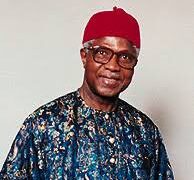
Three years after his appointment as Director-General of the National Orientation Agency (NOA), Mallam Lanre Issa-Onilu has continued to steer the agency through reforms aimed at improving public communication, strengthening citizen engagement and promoting national reorientation. Under his leadership, the agency has introduced new ways to communicate government policies, expanded its public engagement channels, and intensified efforts to promote Nigerian values.
From institutional restructuring to technology-driven communication and partnerships with public and private organisations, the changes recorded during his tenure reflect an effort to make the NOA more accessible to Nigerians and better equipped to carry out its mandate.
At the heart of this work is the National Identity Project, which led to the development of the National Values Charter (NVC). The Charter sets out mutual expectations between the government and citizens, aiming to build a stronger sense of national identity, responsibility, and shared purpose.
The framework rests on three pillars: the Nigerian Promise, Citizen Codes and Institutionalisation Policies. While the Nigerian Promise outlines the government’s responsibilities, the Citizen Codes spell out the duties of citizens. The Institutionalisation Policies, meanwhile, seek to embed these values in public institutions and everyday life.
Under Issa-Onilu, the agency has also taken steps to make its services more accessible to the public. One of the latest developments is the establishment of a toll-free call centre, which gives Nigerians a direct channel to contact the NOA for information about government policies, programmes and activities.
Through the centre, citizens can also submit complaints, make inquiries and seek clarification on issues affecting their communities. It provides an avenue for Nigerians to ask questions about services delivered by government ministries, departments, agencies and other public institutions, while bringing their concerns directly to the attention of the agency.
His push to expand the agency’s communication channels has also included the use of artificial intelligence. Through CLHEEAN, an AI-powered chatbot developed under his leadership, Nigerians can access information about government policies, programmes and national issues.
The agency has also introduced The Explainer, a weekly newsletter that presents government policies in clear, accessible language. This is complemented by The Explainer Plus, which publishes reports in four national newspapers—Punch, The Nation, THISDAY and Leadership. The publications provide coverage of the agency’s activities at its headquarters and across its 36 state offices, including the Federal Capital Territory.
Within the agency, Issa-Onilu has pursued changes to its structure and internal operations. Six zonal directorates have been established across Nigeria’s geopolitical zones, alongside additional departments intended to improve coordination and strengthen the agency’s presence at regional and grassroots levels.
He has also introduced Computer-Based Test (CBT) assessment for staff promotion examinations, bringing a technology-driven approach to the evaluation of personnel. The reform is intended to improve the administration of promotion exercises and strengthen transparency in the agency’s internal processes.
Staff development has remained part of his administration’s priorities. Through training programmes, workshops and seminars, personnel have continued to receive opportunities to improve their skills and build the capacity required for public communication, community engagement and the implementation of sensitisation campaigns.
To support the agency’s field operations, Issa-Onilu also oversaw the procurement of official vehicles and buses for directors and other personnel. The provision is intended to ease transportation for official assignments and help staff carry out their responsibilities across the country.
Partnerships have equally featured in his approach to expanding the NOA’s reach. Under his leadership, the agency has engaged organisations including the Securities and Exchange Commission (SEC), the National Identity Management Commission (NIMC), the Central Bank of Nigeria (CBN), the Lagos International Festival of Animation (LIFANIMA), the International Committee of the Red Cross (ICRC), the Nigeria Football Federation (NFF) and the Federal Ministry of Finance, among others.
Through these engagements, the NOA works with the institutions to improve public understanding of their mandates, policies, programmes and services. The partnerships also provide opportunities to promote national values across different sectors and help Nigerians better understand the roles these organisations play in the country’s development.
One of the more distinctive initiatives to emerge from this partnership approach is the animation contest organised by the NOA in collaboration with LIFANIMA. Under Issa-Onilu’s leadership, the agency has turned to creative storytelling as another way to communicate national identity, inviting animators to use their skills to explain what it truly means to be Nigerian.
The contest encourages participants to portray the values, attitudes and responsibilities that define Nigerian citizenship through animation. By using stories and characters that audiences can relate to, the initiative seeks to make conversations about national identity more engaging, particularly for children and young people.
It also supports the Institutionalisation Policies under the National Values Charter by encouraging the development and nationalisation of animation content for children and young people aged one to 16. The intention is to promote locally relevant stories that reflect Nigeria’s culture and experiences while introducing younger audiences to the values associated with being Nigerian.
Under Issa-Onilu, the agency has also strengthened its capacity to produce radio and television content through the establishment of modern studios. These facilities support the production of audio-visual materials for civic education, public awareness and communication on issues of national importance.
The NOA has continued to take its sensitisation campaigns across the country, addressing issues such as drug abuse, internet fraud, flood awareness, national unity, security consciousness, respect for national symbols and dangerous graduation practices among students. Through these campaigns, the agency engages communities on concerns that affect everyday life and encourages responsible citizenship.
Security communication has also received attention. In collaboration with the Office of the National Security Adviser (ONSA), Issa-Onilu initiated the Monthly National Security Briefing, held on the first Monday of each month at the NOA headquarters. The platform brings relevant stakeholders together to discuss security issues and keep the public informed about efforts to address insecurity.
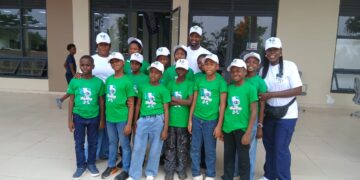
His administration has also created opportunities for young Nigerians to engage with issues of national importance through the National Campus Debate initiative. The programme brings students from tertiary institutions together to discuss patriotism, national unity and ethical leadership, encouraging them to exchange ideas about the country’s future and their responsibilities as citizens.
Beyond Nigeria’s borders, Issa-Onilu has continued to pursue efforts to improve the country’s international image. Through the placement of selected campaign jingles on international television platforms, including CNN and SuperSport, the NOA has extended some of its public communication messages to audiences beyond the country.
He has also encouraged the participation of agency staff in international conferences, events and professional engagements, providing opportunities for knowledge exchange and broader exposure. These efforts form part of the agency’s work to project Nigeria’s identity, values and achievements to the international community.
Recently, Issa-Onilu joined global stakeholders in London in efforts to project Nigerian ingenuity to the world. His participation added to the agency’s continuing efforts to showcase the creativity, innovation and potential of Nigerians before an international audience.
Three years into his tenure, the changes at the NOA span public communication, internal administration, partnerships and national values advocacy. From the toll-free call centre and AI-powered chatbot to the introduction of CBT promotion examinations and the expansion of the agency’s operational structure, the reforms have touched several aspects of its work.
The task ahead is to build on these developments and ensure that the agency’s programmes continue to reach the people they are designed to serve. Making government information accessible, helping citizens understand public services and encouraging Nigerians to embrace their civic responsibilities remain central to the NOA’s mandate.
As the agency enters another year under Issa-Onilu’s leadership, sustaining these initiatives and extending their reach will be important to the next phase of its work. The National Values Charter, in particular, presents an opportunity to move national values beyond a formal framework and encourage their practice in public institutions and everyday interactions among Nigerians.
At three, Issa-Onilu’s tenure has been marked by a range of reforms and initiatives, with further work ahead. The next chapter will be shaped by how these efforts translate into stronger public understanding, responsible citizenship and a deeper appreciation of what it means to be Nigerian.