
















By Ikeoha Jephta Ugwuiyi (NMI)
In Enugu’s political firmament, Governor Peter Ndubuisi Mbah is steadily scripting a chapter that commands attention beyond the ordinary calculations of party politics. The unveiling of the APC Campaign Council for the 2027 general elections, with Mbah at its helm and 51 directorates assembled for the task ahead, is a striking portrait of political convergence around a governor whose administration has placed infrastructure, education, healthcare, aviation and economic transformation at the centre of its public agenda. When the political atmosphere begins to gather names of consequence from different generations and persuasions, one cannot but admire the breadth of the coalition taking shape around the Lion Building. Mbah is not merely preparing for another election; he is presiding over a political moment in which the old and the new are finding common ground beneath one banner.
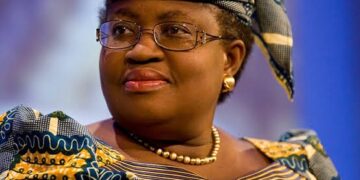
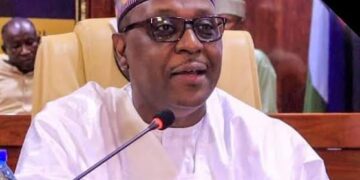
From Nwobodo to Chime, from Ugwuanyi to the Nnamani political establishment, from Prof. Nnaji to Arthur Eze and Frank Nweke, the constellation of distinguished names associated with the advisory structure speaks to the extraordinary breadth of Enugu’s political establishment represented in the unfolding project. Add the array of coordinators, directorate heads, party officials and public figures, and the picture becomes even more compelling. These are not names that emerged from a political vacuum; they carry histories, constituencies and networks of their own. Their presence lends the campaign council considerable political weight and places Mbah at the centre of an expansive mobilisation whose significance extends beyond the walls of the party secretariat.
What makes the Mbah story particularly interesting is the governance narrative accompanying this political consolidation. Roads are being constructed, the Smart Green Schools initiative is reshaping the conversation around public education, Enugu Air has introduced a new dimension to the state’s economic ambitions, and investments in infrastructure and public services have given the administration a substantial portfolio to present before the electorate. Every completed road, every functioning school, every improved public facility and every economic opportunity that reaches an ordinary family strengthens the argument for continuity. The beauty of governance is that its finest campaign material is written on the ground, where citizens encounter its consequences in their daily lives. This is where Mbah’s supporters can find their loudest applause—not merely in political gatherings, but in the tangible fruits of public administration.
For the opposition, the gathering of this formidable political assembly presents a challenge that cannot be wished away with press releases, social-media taunts or predictions of an imminent political collapse. While the APC is arranging its ranks across 51 directorates and drawing from a broad spectrum of established political figures, its rivals must contend with the difficult business of presenting a persuasive alternative to the administration’s agenda. Politics is not sustained by the volume of denunciations but by the weight of ideas, the credibility of proposals and the capacity to convince citizens that another course would serve them better. The opposition may possess its own voices and constituencies, but it must demonstrate that it has more to offer Enugu than an endless catalogue of complaints. In the unfolding contest, the Lion Building has become the arena in which competing records, ambitions and propositions must ultimately meet.
And so, the road to the Lion Building in 2027 is being approached by Mbah with an imposing political structure and a governance record his supporters are eager to place before the people. The governor has gathered an impressive array of political heavyweights under the APC banner, and the breadth of that assembly gives his campaign a distinctive character at this early stage of the contest.